The Atmospheric Conditions That Make AGI Development Feel Inevitable
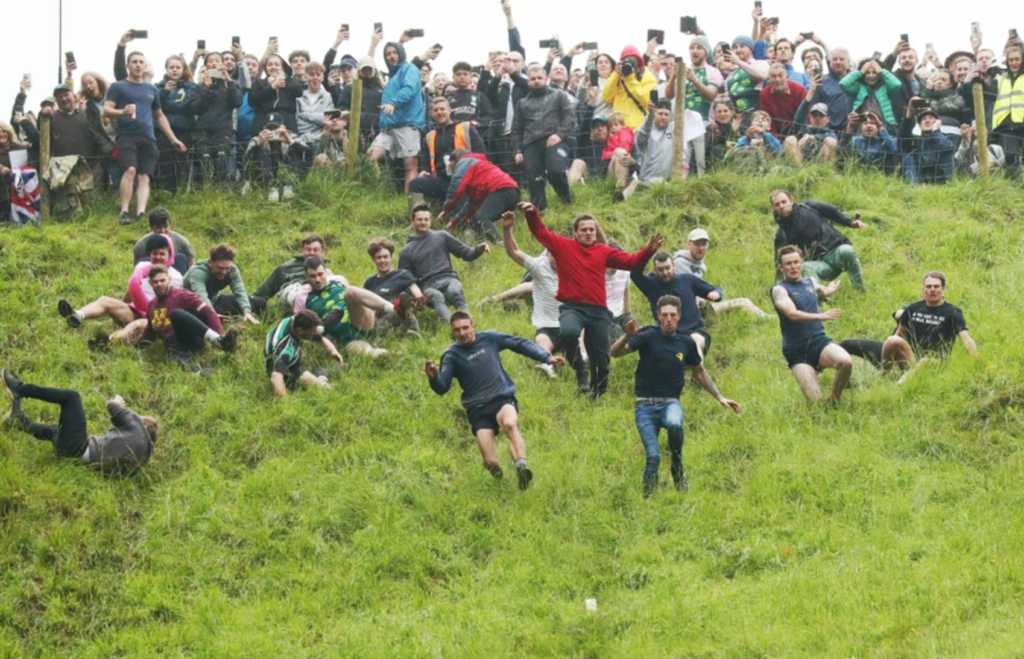
When people talk about the “race” toward artificial general intelligence, they often frame it as a story of motivation—ambition, competition, curiosity, fear. But when we look through the fractal lens, we don’t see innovators sprinting toward a goal. We see them trying to keep their balance as they rush downhill, carried by the terrain itself. The direction and momentum are not personal choices; they are structural consequences of the Human Atmosphere.
Several atmospheric conditions make AGI development feel less like a decision and more like gravity.
1. The Efficiency Gradient
In the Fractal Universe, things move toward greater efficiency whenever the terrain allows it. Intelligence amplification is the steepest gradient available right now. Any tool that lets humans do more with less becomes self-reinforcing. AGI represents the far edge of this gradient, the point where the slope becomes too steep to resist. No one needs motivation to move downhill.
2. The Complexity Threshold
Civilization has reached a level of complexity that strains our existing cognitive and organizational structures. When a system becomes too complex to manage, it naturally births a new layer of organization. AGI emerges not as a desire but as a structural necessity—a compensatory layer forming under the weight of accumulated complexity.
3. The Stillpoint of Collective Overwhelm
The Human Atmosphere is currently saturated with overstimulation, loneliness, economic precarity, and a longing for relief. Technologies that promise clarity, support, and acceleration align perfectly with this emotional Stillpoint. AGI is not being pushed forward; it is being pulled into the vacuum created by collective overwhelm.
4. The Competitive Cascade
Even if an individual or company wanted to slow down, the surrounding conditions make stillness impossible. Global competition, investor pressure, national security narratives, and the fear of being left behind create a cascade effect. Once the slope begins, everyone must run simply to avoid falling.
5. The Narrative Tailwind of Progress
Our culture carries a deep mythos that progress is linear, inevitable, and heroic. This narrative acts like a tailwind, accelerating movement even when no one is steering. AGI becomes framed as the next chapter of human destiny, and narratives—once established—generate their own momentum.
6. The Economic Gravity Well
Capital flows toward automation, scalability, and exponential growth. AGI promises all three. Once capital enters a gravity well, it deepens the well. The economic terrain becomes self-shaping, pulling innovation toward the lowest point of resistance.
7. The Identity Loop of Innovators
People who work at the frontier often build their identities around pushing boundaries and solving impossible problems. Identity itself becomes an atmospheric pressure system, keeping feet moving even when the deeper reasons are unclear. The individual believes they are choosing the path, but the path is choosing them.
Taken together, these conditions form a terrain where acceleration is the default. AGI development feels inevitable not because innovators are motivated, but because the Human Atmosphere has shaped a slope where motion is the path of least resistance. The story is not one of intention but of geometry.
Apply & Observe:
It’s a good thing to take responsibility for our own actions, but what if those actions are happening on a steep slope that provides the forward momentum?
- Where in your life do you feel like you’re “choosing,” and where do you feel like you’re simply keeping your balance on a slope that’s already moving?
- What pressures, expectations, or atmospheres around you create a sense of inevitability—subtle currents that shape your direction without asking your permission?
- What small shift in posture—mental, emotional, or practical—would help you navigate your current terrain with more awareness and control?
If you would like to continue investigating this topic, here is a link to the Journal Portal.