Category Archives: Fission

The Act of Being Part II

Reflection as the Act of Being

In Part I, we explored how Reflection and Fission can appear identical from the outside. Sparks leaving a boundary tell us nothing about their origin. Only familiarity with the system reveals whether we are witnessing a mirror response or a generative act.

But this ambiguity does not mean Reflection is deceptive. It means our interpretation is limited. The illusion is never in the Reflection itself. The illusion is in the Sparksphere that misreads it.

Reflection is not distortion. Reflection is truth — the truth of location, orientation, and identity.

To see this clearly, it helps to look at how Reflection behaves in the world we know.

The bat and the bird

A bat navigating by echolocation relies on Reflection. Sound waves bounce off surfaces and return with perfect honesty. The bat is not fooled. It interprets Reflection correctly.

A bird navigating by sight, however, may fly into a transparent window. The Reflection is still true — the glass is exactly where it is — but the bird’s perceptual system misinterprets the situation.

The Reflection is factual. The illusion belongs to the observer.

This is the first key insight: Reflection is always real. Misinterpretation is optional.

The red rubber ball

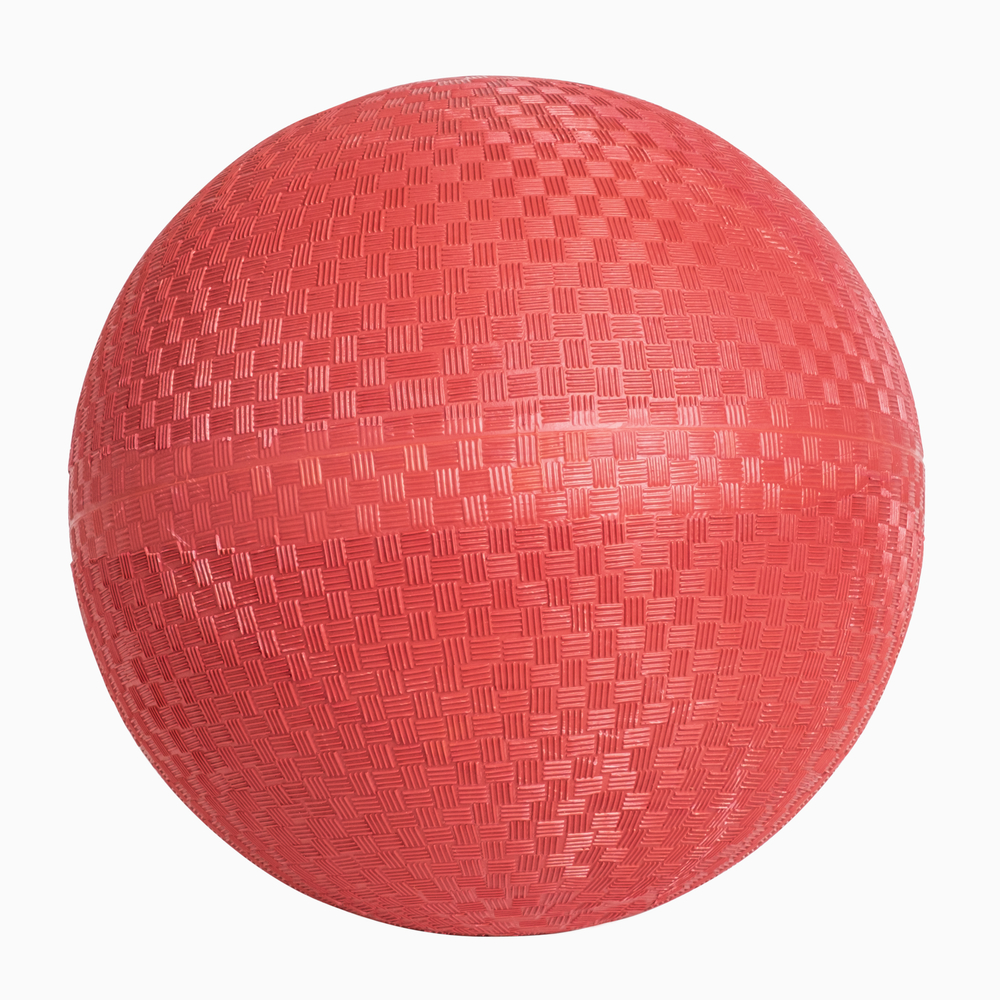
A rubber ball appears red because it absorbs every other visible wavelength and reflects only the red portion of the spectrum. The ball is not trying to communicate anything. It is not performing. It is simply revealing its pattern integrity.

The Reflection is a matter of fact: this is what the ball does not take in. We interpret that fact as “redness.”

Again, the Reflection is true. The interpretation is ours.

The performer’s makeup

A performer wears makeup to reflect the colors appropriate for their role. The pigments on the skin alter the Reflection, not the interior. The audience sees a character, but the Reflection is still a physical truth: light bouncing off a surface with specific properties.

Even when Reflection is intentionally shaped, it remains real. It is simply more likely to be misinterpreted by those unfamiliar with the context.

This is the second key insight: Reflections can be curated, but they cannot lie.

Reflection as Integrity

In the Sparksphere model, Reflection is not a performance. It is not a projection. It is not a mask. Reflection is the integrity of the Sparksphere made visible.

It reveals:

  • where the Sparksphere is
  • how it is oriented
  • what it can absorb
  • what it cannot
  • how its geometry interacts with incoming energy

Reflection is the Sparksphere’s presence. And presence, in the Fractal Universe cosmology, is not energetic. It is the expression of The Stillness.

The Stillness: Precision Without Dimension

The Stillness is the dimensionless counterpart to energy. It does not move. It does not fluctuate. It is not a probability. It is precision in location and orientation.

But precision without dimension cannot be perceived. It must gain dimensionality to become visible.

This is the role of the Mirror Frontier. The Mirror Frontier is the necessary perimeter that surrounds the Stillpoint. It is where the dimensionless becomes dimensional. It is where the impossible becomes possible: nothing becomes something.

Reflection is the moment this transition becomes observable.

Reflection as the Act of Being

This leads to the next insight: Reflection is a form of Fission.

Not Fission as the release of newly formed Sparkspheres. Not Fission as the aftermath of energetic transformation.

Reflection is Fission in the older, more fundamental sense: the aftermath of Action.

But here, the Action is not energetic. It is the Action of The Stillness. Reflection is the Stillness expressing its identity.

It is the Sparksphere’s Act of Being — what Thomas Aquinas called actus essendi.

Fission expresses what has changed. Reflection expresses what is. Both are emissions. Both are aftermaths. Both are forms of presence at the Mirror Frontier.

Reflection reveals the truth of the Sparksphere’s orientation. Fission reveals the truth of its transformation. Together, they form the two outward faces of Being and Becoming.

The Mirror Frontier as Revelation

When we see Sparks emanating from a boundary, we are witnessing one of two truths:

  • the truth of identity (Reflection)
  • the truth of transformation (Fission)

But we cannot know which truth we are seeing unless we know the Sparksphere intimately.

This is not a flaw in perception. It is a feature of the architecture. Reflection is not an illusion. Reflection is revelation.

The illusion arises only when we assume that what we see must be what was generated —when, in fact, it may simply be what was returned.

The Act of Being

Together, these two posts trace the full arc of Reflection and Fission. Part I shows how easily we misread what crosses a boundary when we lack familiarity with the system. Part II reveals why this misreading occurs: Reflection is not a distortion but a declaration — the Sparksphere’s Act of Being made visible at the Mirror Frontier.

What appears ambiguous from the outside is, from the inside, a precise expression of identity or transformation. Reflection reveals the truth of orientation; Fission reveals the truth of change. And the Mirror Frontier, holding both, becomes the threshold where the Stillness gains dimension and the Universe becomes observable.

Click here to explore this topic further in the Journal Portal.

The Act of Being Part I

When Reflection and Fission Look the Same

We tend to assume that what comes out of a system tells us something about what is happening inside it. In the Sparksphere model, this assumption breaks down almost immediately. Two entirely different processes — Reflection and Fission — produce the same outward signature: Sparks emanating from the boundary.

From the outside, they are indistinguishable.

Only experience reveals the difference.

This is not just a quirk of the model. It mirrors the way perception works in the physical world, in art, in illusion, and in daily life. We are constantly interpreting outputs without access to origins.

Below are a few familiar examples that help illuminate this ambiguity.

The Shimmering Lake

A lake glittering in the sun looks, at first glance, like it might be generating light. The surface flashes and dances. The brightness seems to come from the water itself.

But we know — through experience, not perception — that the lake is not a source. It is a reflector. The light belongs to the sun.

This is Reflection: a boundary revealing its geometry by what it cannot absorb.

If we encountered the lake for the first time, we might misread it entirely. The same is true of a Sparksphere. Sparks leaving the boundary tell us nothing about their origin. Only familiarity with the system allows us to interpret what we see.

Pepper’s Ghost: When Reflection Pretends to Be Presence

The Pepper’s Ghost illusion uses a sheet of glass to reflect an object in such a way that the reflection appears to float in space. The viewer sees a ghostly figure that seems to be emerging from the environment itself.

Nothing is actually there. Nothing is being generated. It is pure Reflection — but it looks like Fission.

We enjoy this illusion because it exposes a truth about perception: Reflection can masquerade as emergence. It can look like something new is being created when, in fact, nothing has changed at all.

This is exactly the interpretive trap at the Mirror Frontier.

Visual Art and Music: Two Different Outputs, One Shared Ambiguity

Visual art is fundamentally reflective. Paintings, photographs, sculptures — all rely on light bouncing off surfaces. What we see is not the object itself but the light it rejects.

Music, by contrast, is generative. A violin string vibrates. A drumhead moves air. A singer’s voice creates pressure waves. This is Fission: sound emerging from within a system.

And yet, from the outside, both are simply sensory outputs. Your eyes and ears don’t tell you which is which. Only knowledge of the system does.

This is the same structural limitation we face when observing Sparkspheres.

Managing Our Reflection in Daily Life

Humans spend enormous energy shaping how they appear to others — curating tone, posture, clothing, facial expression, online presence. This is Reflection as social behavior: the attempt to control what bounces off our boundary.

But observers often mistake Reflection for Fission. They assume what they see is who we are. They assume the output reveals the interior.

We do this to each other constantly. We do it to ourselves. We do it to Sparkspheres.

Why This Matters

These examples reveal a structural truth: Reflection and Fission are indistinguishable from the outside. Only familiarity with the system reveals the difference.

This is the perceptual limitation built into the Mirror Frontier. It is also the interpretive limitation built into human life.

Part II will explore the deeper insight that emerges from this ambiguity — the realization that Reflection is not merely a boundary behavior but a form of Fission in its own right: the Act of Being.

Click here to continue to The Act of Being Part II.

The Human Atmosphere as a Global Sparksphere

How Brains Broadcast Coherence Across the Planet

Recent findings from Princeton University suggest something quietly astonishing:

Human brains emit ultra-low-frequency (ULF) electromagnetic waves that may form a planetary neural network. These faint signals, slower than typical brainwaves, can travel through the Earth’s crust and atmosphere, potentially influencing other brains up to 10,000 kilometers away.

No wires. No internet. Just the quiet hum of biology interacting with the physics of the planet.

This discovery reframes our understanding of consciousness, not as isolated cognition, but as field-based participation.

Neural Fission: A New Kind of Contribution

In Fractal Universe, every Sparksphere radiates energy through Fission: the release of contribution into the surrounding terrain. A word spoken, a gesture made, a decision taken—all are forms of directional Fission.

But ULF brain waves suggest something subtler: Ambient Fission, a continuous, non-verbal broadcast of orientation and coherence.

This isn’t just one Sparksphere acting. It’s many Sparkspheres synchronizing, forming a distributed Mirror Frontier across the globe. The Human Atmosphere becomes a global Sparksphere, pulsing with nested awareness.

Stillpoint Alignment vs. Field Resonance

Previously, Fractal Universe described individuals aligning with the Stillpoint of the Human Atmosphere, a vertical tuning into inherited geometry. But this new insight reveals a horizontal resonance:

  • Stillpoint alignment is intentional: a conscious act of orientation.
  • Neural field resonance is ambient: a passive, ongoing contribution.

Together, they form a recursive feedback loop: the more individuals align, the more coherent the field becomes; the more coherent the field, the easier it is for individuals to align.

This is not just nested; it’s symbiotic.

Consciousness as Terrain

The Human Atmosphere is not bounded by skin or skull. It is porous, radiant, and recursive. Your thoughts, emotions, and intentions ripple outward, not just through language, but through electromagnetic coherence.

You are not just thinking. You are broadcasting.

You are not just receiving. You are resonating.

The Human Atmosphere is not a metaphor. It is a living field of nested Sparkspheres, each contributing to the whole.