In a Sparksphere, the rhythm of Fusion–Action–Fission is the movement of energy itself. Fusion is the meeting of elements that creates something new. Action is that new thing stepping into motion. Fission is where that motion travels next—how it lands, disperses, or influences the world beyond its origin.
In my personal journals, I begin each day with a small sketch of this rhythm. I use a lighthouse as the symbol for Action. Why a lighthouse?
Fusion happens inside the lighthouse. Electricity meets the lamp. The keeper throws the switch. In that instant, the internal elements align and something new is born: illumination. That moment of ignition is Fusion. The light turning on is Action.
But the lighthouse is never acting alone. It is part of a larger system designed to keep nearby ships safe. Its placement is intentional—situated so that the Fission from its Action, the outward sweep of its beam, reaches the vessels that need it. The keeper lights the lamp for that purpose. The structure exists for that purpose. The entire system is oriented toward that purpose.
You could say the lamplighter wants to make the world a better place. That’s why they show up. That’s why they take the Action of lighting the lamp. They don’t say, “It’s warm and cozy in here; I think I’ll read a book instead.” But they also don’t carry the lamp out to sea and shine it directly into the watchman’s eyes. That part isn’t theirs to control. They trust the system. If they do their part, the light can do its part, the crew can do theirs, and even the dangerous rocks are doing their part by making the whole system necessary.
Action is the Sparksphere Happening we most identify with—our doing, our choosing, our visible expression. But Action is never an isolated event. An individual is like a lighthouse: there is a purpose, a call to Action, and also a larger system that surrounds it and gives that Action meaning. We may want to make the world a better place, but our role may not look like the outcome we imagine. Flipping a switch isn’t the same as making a ship safe, yet it is essential to the ship’s safety.
We might wish the world had no dangerous rocks, but the lighthouse stands on the same geological feature that threatens the ships. Everything has its part to play. We don’t need to overstep. Doing one’s job well—responding to the call of Action within one’s own Sparksphere—is enough.
In Part I, we explored how Reflection and Fission can appear identical from the outside. Sparks leaving a boundary tell us nothing about their origin. Only familiarity with the system reveals whether we are witnessing a mirror response or a generative act.
But this ambiguity does not mean Reflection is deceptive. It means our interpretation is limited. The illusion is never in the Reflection itself. The illusion is in the Sparksphere that misreads it.
Reflection is not distortion. Reflection is truth — the truth of location, orientation, and identity.
To see this clearly, it helps to look at how Reflection behaves in the world we know.
The bat and the bird
A bat navigating by echolocation relies on Reflection. Sound waves bounce off surfaces and return with perfect honesty. The bat is not fooled. It interprets Reflection correctly.
A bird navigating by sight, however, may fly into a transparent window. The Reflection is still true — the glass is exactly where it is — but the bird’s perceptual system misinterprets the situation.
The Reflection is factual. The illusion belongs to the observer.
This is the first key insight: Reflection is always real. Misinterpretation is optional.
The red rubber ball
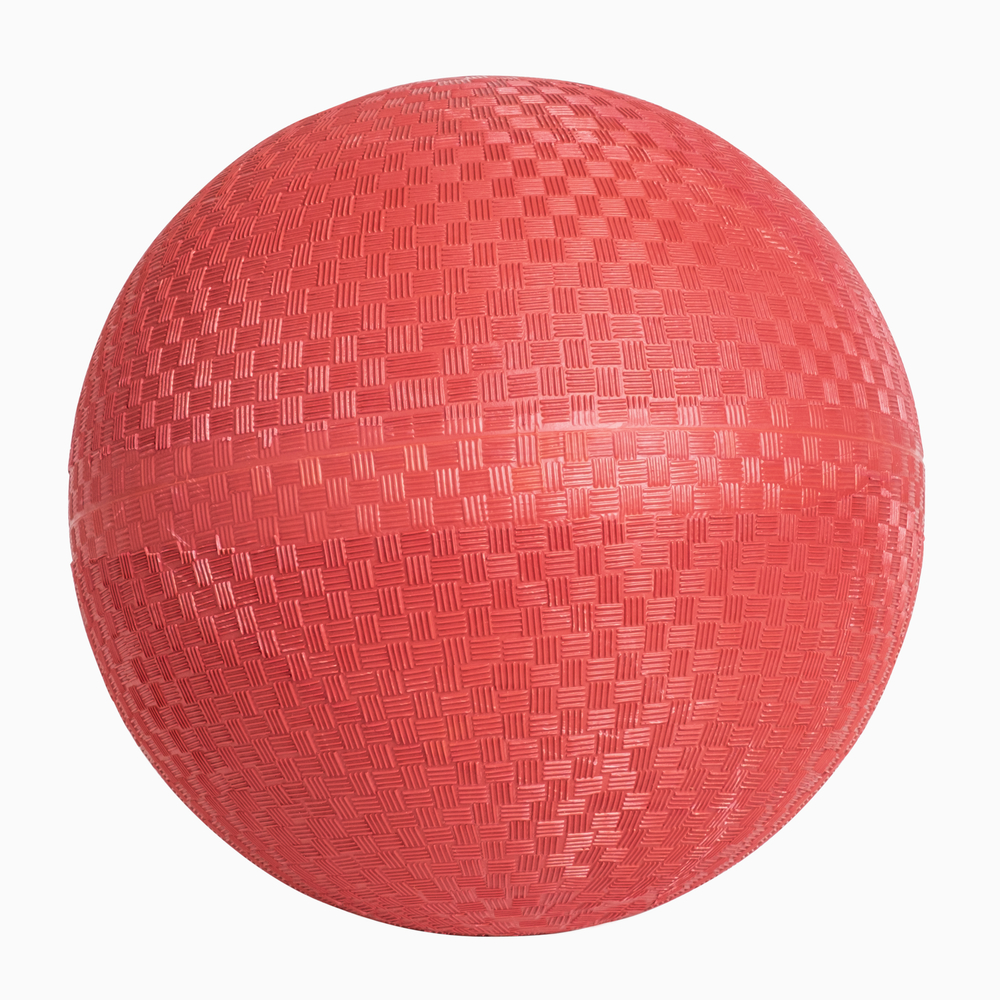
A rubber ball appears red because it absorbs every other visible wavelength and reflects only the red portion of the spectrum. The ball is not trying to communicate anything. It is not performing. It is simply revealing its pattern integrity.
The Reflection is a matter of fact: this is what the ball does not take in. We interpret that fact as “redness.”
Again, the Reflection is true. The interpretation is ours.
The performer’s makeup
A performer wears makeup to reflect the colors appropriate for their role. The pigments on the skin alter the Reflection, not the interior. The audience sees a character, but the Reflection is still a physical truth: light bouncing off a surface with specific properties.
Even when Reflection is intentionally shaped, it remains real. It is simply more likely to be misinterpreted by those unfamiliar with the context.
This is the second key insight: Reflections can be curated, but they cannot lie.
Reflection as Integrity
In the Sparksphere model, Reflection is not a performance. It is not a projection. It is not a mask. Reflection is the integrity of the Sparksphere made visible.
It reveals:
where the Sparksphere is
how it is oriented
what it can absorb
what it cannot
how its geometry interacts with incoming energy
Reflection is the Sparksphere’s presence. And presence, in the Fractal Universe cosmology, is not energetic. It is the expression of The Stillness.
The Stillness: Precision Without Dimension
The Stillness is the dimensionless counterpart to energy. It does not move. It does not fluctuate. It is not a probability. It is precision in location and orientation.
But precision without dimension cannot be perceived. It must gain dimensionality to become visible.
This is the role of the Mirror Frontier. The Mirror Frontier is the necessary perimeter that surrounds the Stillpoint. It is where the dimensionless becomes dimensional. It is where the impossible becomes possible: nothing becomes something.
Reflection is the moment this transition becomes observable.
Reflection as the Act of Being
This leads to the next insight: Reflection is a form of Fission.
Not Fission as the release of newly formed Sparkspheres. Not Fission as the aftermath of energetic transformation.
Reflection is Fission in the older, more fundamental sense: the aftermath of Action.
But here, the Action is not energetic. It is the Action of The Stillness. Reflection is the Stillness expressing its identity.
It is the Sparksphere’s Act of Being — what Thomas Aquinas called actus essendi.
Fission expresses what has changed. Reflection expresses what is. Both are emissions. Both are aftermaths. Both are forms of presence at the Mirror Frontier.
Reflection reveals the truth of the Sparksphere’s orientation. Fission reveals the truth of its transformation. Together, they form the two outward faces of Being and Becoming.
The Mirror Frontier as Revelation
When we see Sparks emanating from a boundary, we are witnessing one of two truths:
the truth of identity (Reflection)
the truth of transformation (Fission)
But we cannot know which truth we are seeing unless we know the Sparksphere intimately.
This is not a flaw in perception. It is a feature of the architecture. Reflection is not an illusion. Reflection is revelation.
The illusion arises only when we assume that what we see must be what was generated —when, in fact, it may simply be what was returned.
The Act of Being
Together, these two posts trace the full arc of Reflection and Fission. Part I shows how easily we misread what crosses a boundary when we lack familiarity with the system. Part II reveals why this misreading occurs: Reflection is not a distortion but a declaration — the Sparksphere’s Act of Being made visible at the Mirror Frontier.
What appears ambiguous from the outside is, from the inside, a precise expression of identity or transformation. Reflection reveals the truth of orientation; Fission reveals the truth of change. And the Mirror Frontier, holding both, becomes the threshold where the Stillness gains dimension and the Universe becomes observable.
Click here to explore this topic further in the Journal Portal.
We tend to assume that what comes out of a system tells us something about what is happening inside it. In the Sparksphere model, this assumption breaks down almost immediately. Two entirely different processes — Reflection and Fission — produce the same outward signature: Sparks emanating from the boundary.
From the outside, they are indistinguishable.
Only experience reveals the difference.
This is not just a quirk of the model. It mirrors the way perception works in the physical world, in art, in illusion, and in daily life. We are constantly interpreting outputs without access to origins.
Below are a few familiar examples that help illuminate this ambiguity.
The Shimmering Lake
A lake glittering in the sun looks, at first glance, like it might be generating light. The surface flashes and dances. The brightness seems to come from the water itself.
But we know — through experience, not perception — that the lake is not a source. It is a reflector. The light belongs to the sun.
This is Reflection: a boundary revealing its geometry by what it cannot absorb.
If we encountered the lake for the first time, we might misread it entirely. The same is true of a Sparksphere. Sparks leaving the boundary tell us nothing about their origin. Only familiarity with the system allows us to interpret what we see.
Pepper’s Ghost: When Reflection Pretends to Be Presence
The Pepper’s Ghost illusion uses a sheet of glass to reflect an object in such a way that the reflection appears to float in space. The viewer sees a ghostly figure that seems to be emerging from the environment itself.
Nothing is actually there. Nothing is being generated. It is pure Reflection — but it looks like Fission.
We enjoy this illusion because it exposes a truth about perception: Reflection can masquerade as emergence. It can look like something new is being created when, in fact, nothing has changed at all.
This is exactly the interpretive trap at the Mirror Frontier.
Visual Art and Music: Two Different Outputs, One Shared Ambiguity
Visual art is fundamentally reflective. Paintings, photographs, sculptures — all rely on light bouncing off surfaces. What we see is not the object itself but the light it rejects.
Music, by contrast, is generative. A violin string vibrates. A drumhead moves air. A singer’s voice creates pressure waves. This is Fission: sound emerging from within a system.
And yet, from the outside, both are simply sensory outputs. Your eyes and ears don’t tell you which is which. Only knowledge of the system does.
This is the same structural limitation we face when observing Sparkspheres.
Managing Our Reflection in Daily Life
Humans spend enormous energy shaping how they appear to others — curating tone, posture, clothing, facial expression, online presence. This is Reflection as social behavior: the attempt to control what bounces off our boundary.
But observers often mistake Reflection for Fission. They assume what they see is who we are. They assume the output reveals the interior.
We do this to each other constantly. We do it to ourselves. We do it to Sparkspheres.
Why This Matters
These examples reveal a structural truth: Reflection and Fission are indistinguishable from the outside. Only familiarity with the system reveals the difference.
This is the perceptual limitation built into the Mirror Frontier. It is also the interpretive limitation built into human life.
Part II will explore the deeper insight that emerges from this ambiguity — the realization that Reflection is not merely a boundary behavior but a form of Fission in its own right: the Act of Being.
Click here to continue to The Act of Being Part II.
Action Without Traction begins with doubt. Not the useful kind of doubt that questions truth or accuracy, but the kind that latches onto what lies beyond our control—doubting others’ abilities, doubting that plans will unfold, doubting ourselves. When these doubts fuse with sparks from the world around us, they generate motion without progress. Like a car stuck in the mud, pressing harder only spins the wheels, splattering negativity outward but never moving forward.
In the fractal universe, doubt is not a discrete problem to be solved but an inner structure that emerges. Sparks flow continuously—news, impressions, memories, expectations—and when they fuse with doubt, clouds of negativity form in the atmosphere of the mind. This is not a pathology but a weather system: a recursive cycle of Fusion, Action, and Fission that can leave us exhausted without direction.
Is there a dark cloud over your head? Feeling down? Doubt is counterproductive by nature. It gets us nowhere, but it causes us to lean towards the negative as we look in the direction of failure.
“You should never, never doubt something that no one is sure of.”― Roald Dahl, Charlie and the Chocolate Factory
It’s natural to make predictions about things we can’t control, but doubt can be a self-fulfilling prophesy. Effective action begins with a change in terrain. A car stuck in mud does not escape by spinning faster—it finds traction when the driver pauses, eases off the pedal, and lets the earth firm beneath the tires. Accept the unknowable and doubt will evaporate.
Take a moment to reflect:
What have I been doubting lately?
Am I pressing harder on the gas pedal of rumination, or am I allowing the ground beneath me to settle?
How would it feel to replace doubt with neutrality or faith in the moment?
How might my actions change if I accept the unknowable and redirect my energy to the things I can effectively do?
When we stop feeding doubt with energy, the ground of being steadies. Neutrality or faith becomes the solid road, and forward motion resumes—not frantic, not forced, but aligned with the flow of sparks that now carry us toward clarity.
Childhood memories can become very hazy over time. Luckily, I kept a diary starting when I was about nine years old. The small red book has a strap and a lock for privacy, but luckily, I still have the key. Let’s open it up and see what life was like for me in the mid-1970’s:
“Dear diary, I woke up, ate breakfast, ate lunch, ate dinner, then went to bed.” “School day.” “Ate lunch, ate dinner, then went to bed…”
Hmm. My entire future was being shaped, and all I wrote about was generic activities? Why?
My hazy memories are better than nothing, I suppose. I recall those in-between times when I was just playing with friends on the school playground, or milling around my back yard looking at things, or watching TV in the living room. I think I would have written about them, but it was too hard to put into words and didn’t seem significant.
Waking up, going to bed, eating and going to school were the punctuation of my day: easy to identify, easy to say. But like a sentence, punctuation alone says nothing.
Milestones in life are punctuation too. We identify with them and describe ourselves by listing them, but the picture they paint doesn’t do us justice. The in-between times, the ordinary and undefined experiences, are the true story of our lives. So why not bring them forward and highlight them?
We face the same challenge I faced as a young diarist: how can daily experiences be put into words, and what part of it even matters?
In the fractal universe framework, milestones and events are analogous to Action. We can say “I did that, that was me.” We identify with it, and that is a valid thing to do. We can communicate our identity efficiently and identify others as well.
But this is just the tip of the iceberg. We are infinitely more. Undefined life isn’t made for documentation. It is not fixed, it is functional. It is the deeper, more authentic you. You are experiencing it right now.
Take a moment to pause and look beyond the milestones you usually list when describing your life.
• What ordinary, undefined experiences have quietly shaped who you are?
• Where do you feel the Stillpoint of balance, the Mirror Frontier of connection, or the subtle Fusion of new insights in your daily rhythm?
• How might your story change if you gave as much weight to these in‑between moments as you do to the milestones?
It will always be more natural to define our lives by milestones and activities, especially when communicating with others. Undefined life remains there between the lines, adding the truth and richness of who you really are.
In nuclear physics, fusion occurs when atomic nuclei come close enough, under immense pressure and heat, to overcome their natural repulsion and merge. This merging releases extraordinary energy, the same energy that powers stars. It’s not destruction; it’s generative ignition.
In Fractal Universe, Fusion is the moment when Sparks within a Sparksphere cohere into a new integrity. It’s the birth of insight, the crystallization of resonance, the ignition of meaningful Action. The metaphor of nuclear fusion offers a vivid parallel:
Containment Before Creation
Just as fusion requires containment—magnetic fields, pressure chambers, or stellar gravity—Fractal Fusion requires the Mirror Frontier. This boundary holds the Sparksphere together, allowing Sparks to circulate, reflect, and resonate until coherence emerges.
Fusion is not possible in chaos. It requires a field of orientation, a Gravitasphere, where energy can gather and align.
Overcoming Resistance
In nuclear fusion, particles must overcome electrostatic repulsion. In Fractal Fusion, Sparks must overcome incoherence, distraction, and noise. Only those Sparks that resonate with the Gravitasphere can penetrate the Mirror Frontier and participate in Fusion.
The pressure required for fusion is mirrored in the tension topography of the Stillpoint, where past orientation meets present possibility.
Generative Ignition
When Fusion occurs, energy is released, not as explosion, but as Fission: the outward ripple of coherent Action. In nuclear terms, this energy powers stars. In Fractal terms, it powers transformation within the self, the relational field, and the Human Atmosphere.
A single act of coherence, sweeping the porch, tending the garden, writing a truth, can radiate outward like solar light.
Scale-Specific Fusion
Just as fusion reactions differ depending on the atomic scale (hydrogen vs. deuterium), Fractal Fusion is entity-specific. A cell can fuse biological material. A mind can fuse perception. The Human Atmosphere can fuse collective insight into culture, technology, and meaning.
There is no other terrain on Earth that can generate a cell phone, a soccer match, or an internet meme. These are products of human-scale Fusion.
Fusion as Participatory Power
Unlike fossil fuels or fission, nuclear fusion is clean, abundant, and self-sustaining, once ignited. Similarly, Fractal Fusion is not extractive. It’s participatory. It doesn’t consume—it creates. It doesn’t dominate—it radiates.
This is the power of aligned Action: not to control, but to illuminate.
In the Fractal Universe framework, Action is not random, it is the natural expression of Fusion. Sparks converge within the Sparksphere, forming a new coherence. That coherence seeks expression, and when it moves outward, it becomes Action. The ripples of that Action, its Fission, extend into the world, touching everything in its path.
But if I want my Action to be truly beneficial, to myself and my surroundings, it must begin with the Sparks that transmit through my Mirror Frontier. What do I notice? What reflects back to me as needing care, attention, or alignment?
Today, I turned off all electronic sights and sounds. I quieted the incoming signals from the Human Atmosphere and tuned into my immediate physical space. I asked: What can benefit from my Action right now?
First, I noticed my body. I gave it movement and breath through exercise.
Then I looked outside. My garden called to me; I tended the flowers and swept the porch.
Next, I turned inward to my home. I saw small messes, neglected corners, and I addressed them one by one.
Each of these Actions emerged from Sparks close to my Mirror Frontier. They were not abstract or distant; they were tangible, immediate, and reciprocal. I trust that the Fission from these Actions will reflect back in positive ways, both for me and for others.
This is a different kind of “Doing Good.” It’s not driven by obligation or external validation. It’s a matter of fractal scale. If I look far out into the Human Atmosphere, I can see social, environmental, and economic issues that also need attention. These are valid Sparks, but they are distant, and their integration requires a different kind of Fusion. The Fission from this kind of Action can have a wide range of effects: some beneficial, some unintended. The situations are so complex that even a sincere intent to do good can sometimes amplify harm. The scale, entanglement, and abstraction make it difficult to trace coherence.
In contrast, Action at the personal scale may seem small or insignificant. But surprisingly, it can generate profound and positive ripples within the self, the immediate environment, and the relational field. These ripples are more likely to reflect back as coherence, because the Sparks are close to the Mirror Frontier and the Fusion is intimate, embodied, and attuned.
Doing good doesn’t always require reaching far. Sometimes, the most powerful contribution begins with sweeping the porch, tending the garden, or listening to the body. These Actions are not just symbolic, they are fractal. They encode the same principles of care, alignment, and responsiveness that scale outward into the Human Atmosphere.
Today, I chose the near field. I chose coherence at the scale of my own life. And in doing so, I believe I’ve contributed to the larger pattern, not by reaching outward, but by radiating from within.
Recent findings from Princeton University suggest something quietly astonishing:
Human brains emit ultra-low-frequency (ULF) electromagnetic waves that may form a planetary neural network. These faint signals, slower than typical brainwaves, can travel through the Earth’s crust and atmosphere, potentially influencing other brains up to 10,000 kilometers away.
No wires. No internet. Just the quiet hum of biology interacting with the physics of the planet.
This discovery reframes our understanding of consciousness, not as isolated cognition, but as field-based participation.
Neural Fission: A New Kind of Contribution
In Fractal Universe, every Sparksphere radiates energy through Fission: the release of contribution into the surrounding terrain. A word spoken, a gesture made, a decision taken—all are forms of directional Fission.
But ULF brain waves suggest something subtler: Ambient Fission, a continuous, non-verbal broadcast of orientation and coherence.
This isn’t just one Sparksphere acting. It’s many Sparkspheres synchronizing, forming a distributed Mirror Frontier across the globe. The Human Atmosphere becomes a global Sparksphere, pulsing with nested awareness.
Stillpoint Alignment vs. Field Resonance
Previously, Fractal Universe described individuals aligning with the Stillpoint of the Human Atmosphere, a vertical tuning into inherited geometry. But this new insight reveals a horizontal resonance:
Stillpoint alignment is intentional: a conscious act of orientation.
Neural field resonance is ambient: a passive, ongoing contribution.
Together, they form a recursive feedback loop: the more individuals align, the more coherent the field becomes; the more coherent the field, the easier it is for individuals to align.
This is not just nested; it’s symbiotic.
Consciousness as Terrain
The Human Atmosphere is not bounded by skin or skull. It is porous, radiant, and recursive. Your thoughts, emotions, and intentions ripple outward, not just through language, but through electromagnetic coherence.
You are not just thinking. You are broadcasting.
You are not just receiving. You are resonating.
The Human Atmosphere is not a metaphor. It is a living field of nested Sparkspheres, each contributing to the whole.
For decades, black holes have been defined by their mystery: a singularity at the center where gravity becomes infinite, space-time collapses, and the laws of physics break down. It’s the place where equations stop working and meaning dissolves.
But new models are challenging this view. Physicists now propose that black holes may not contain singularities at all. Instead, their centers may be ultra-dense, highly curved regions that still obey physical laws. These models suggest that gravity doesn’t spiral into infinity—it compresses into coherence.
And here’s the twist: If there’s no singularity, then information may not be lost. Matter and energy could re-emerge, perhaps through a white hole in another part of the universe. This is not just a revision of physics. It’s a reframing of what collapse means.
Fractal Universe: A Different Kind of Center
In Fractal Universe, the idea of a singularity has always been structurally incoherent. A singularity implies a rupture in recursive geometry, a breakdown of pattern integrity. But the Fractal Universe framework offers a different view:
Every black hole is a nested Sparksphere: a recursive unit of energy and orientation.
Its center is not a singularity, but a Stillpoint: a dimensionless location made of memory, inherited geometry, and non-energetic orientation.
The extreme curvature and density are not breakdowns; they are intensifications of pattern.
The black hole’s interior is not a void; it is a generative terrain, where Sparks enter, Fusion occurs, and new Sparkspheres may emerge.
In this view, black holes are not cosmic dead ends. They are thresholds of transformation.
Information Is Not Lost—It’s Encoded
The scientific concern about black holes has long centered on information loss. If matter disappears into a singularity, does its history vanish too?
Fractal Universe reframes this:
Information is not lost; it is encoded in the geometry of the Stillpoint. Every action leaves a topographic imprint. Even collapse is a form of contribution.
If matter re-emerges through a white hole, it’s not returning—it’s refracting. It carries the memory of its prior Sparksphere, now expressed through a new orientation.
A New Cosmology of Collapse
This shift, from singularity to structured center, mirrors the core insight of Fractal Universe:
Science says: The singularity may not exist. The center may be curved, dense, and lawful.
Fractal Universe says: The center is the Stillpoint. It holds memory, orientation, and coherence. It is not a breakdown—it is a beginning.
Black holes are not the end of structure. They are the compression of coherence, the folding of memory, and the potential for refracted emergence.
They are Sparkspheres under pressure.
They are Stillpoints in extremis.
They are not the death of meaning—they are its densest form.