The old folktale of John Henry has been echoing in my mind lately. In the story, a man meets a machine that can outpace him in the very work that defines him. The steam drill is faster, tireless, and built for efficiency. John Henry is slower, mortal, and built for meaning. He swings his hammer anyway. He works with his own weight, his own rhythm, his own breath. And although the machine wins the race, the story survives because something in us still recognizes the dignity of doing things by hand.
That tension feels newly alive today. We live in a world where machines—now including AI—can do so many things faster than we can. They can calculate, sort, generate, and optimize at a scale that makes our human pace look quaint. But the more the world accelerates, the more I notice a quiet countercurrent: the desire to feel our own hands in the work.
I’ve started calling people who feel this pull Musclarians.
A Musclarian is someone who chooses human muscle, human pace, and human presence even when a machine could do the task faster.
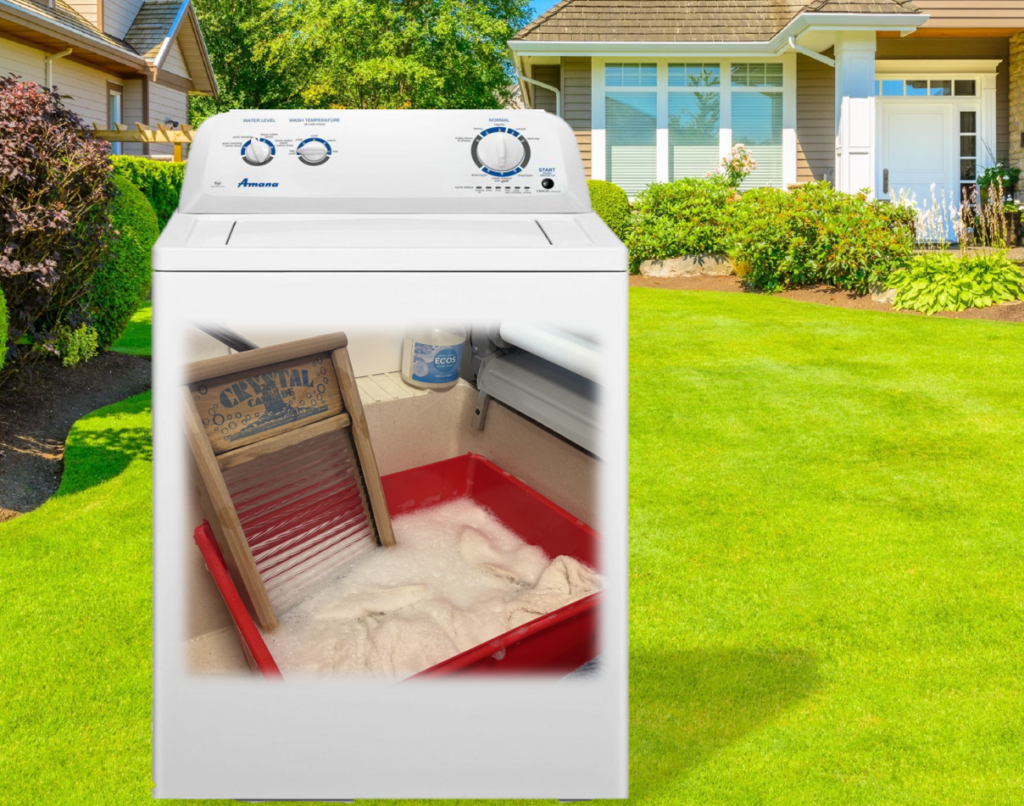
I’m one of them. I don’t own a dishwasher, a washing machine, a microwave, or a car. Not because I’m a purist or a Luddite, but because there is a certain satisfaction in doing things with my own body. When I wash clothes by hand, I feel connected to the rhythm of daily life. When I walk instead of drive, I feel the shape of the world under my feet. When I cook without a microwave, I feel time unfolding in a way that makes sense to me.
This isn’t about rejecting technology. It’s about remembering that we still have a choice.
Machines excel at speed, repetition, and scale.
Humans excel at presence, attention, and embodied meaning.
A craft that takes months to create isn’t inefficient; it’s infused with the inner life of the maker. A loaf of bread kneaded by hand carries the imprint of the person who shaped it. A garden tended slowly over seasons becomes a relationship, not a task.
As AI becomes more capable, many people worry about what will be left for humans to do. But perhaps the answer isn’t to compete with the machine on its terms. Perhaps the answer is to reclaim the value of the human pace. When we admit that we are slower, we stop trying to win the race the machine is built for. We begin to notice the qualities that only emerge in slowness: identity, nuance, intimacy, care.
There is also a deeper layer here. Machines don’t just do tasks; they create ecosystems that recruit us. Cars require roads, parking lots, and a whole architecture of speed. Dishwashers require particular detergents and a rhythm of consumption that keeps them full. AI will have its own ecosystem too—one that shapes how we think, what we expect, and how quickly we feel we must respond.
A Musclarian stance interrupts that automatic recruitment. It asks simple but radical questions:
- Do I want to participate in this machine’s ecosystem?
- What part of myself becomes dormant when I outsource this task?
- What becomes possible when I stay in direct contact with the work?
We don’t have to beat the machine.
We only have to remember that we still have a choice.
And sometimes the slow, human way is not a failure of efficiency but a form of beauty.
Apply & Observe:
Take a moment to notice one small task in your daily life that you usually hand over to a machine or rush through on autopilot. What changes in you when you imagine doing it at your own pace, with your own hands? What part of your attention, presence, or inner rhythm becomes available again?
If you would like to explore this further, click here to enter the Journal Portal.