Mirror Frontier (reflective threshold of awareness, resonance, and transmission)
What is the Mirror Frontier?
The Mirror Frontier is the boundary that defines separateness. It surrounds the Stillpoint, the center of orientation, and together they form the Gravitasphere. This boundary allows an entity to be distinct while remaining connected to its surroundings through Reflection and Transmission.

Example: On a cellular level, it’s important to identify a single cell, but where exactly is its boundary? It cannot be defined with mathematical precision. The cell membrane is both a barrier and a permeable surface, containing its interior while interacting with its surroundings. The Mirror Frontier allows us to envision this kind of boundary, whether physical or metaphysical, with a single term. It describes the edge of any generative entity: a cell, a mind, a community, or a concept.
Clarification: The Mirror Frontier is not a physical wall, but a metaphysical membrane. It operates across nested scales—cellular, cognitive, societal—filtering which Sparks can enter based on resonance with the entity’s orientation.
How does the Mirror Frontier relate to the Stillpoint?
The Stillpoint is the universal center: dimensionless, silent, and pure potential. The Mirror Frontier is its edge: the unique expression of that universal center for a particular entity. Together, they form the Gravitasphere, the orienting field through which energy becomes pattern integrity, through which “things” come into being.
Both are made of The Stillness, carrying the past into the present by way of orientation and tension topography. The Stillpoint holds the memory of all possible paths; the Mirror Frontier gives those paths shape, dimension, and selective permeability.

Example: Aristotle once hypothesized that flies emerged through “spontaneous generation.” But we now understand that living things arise from seeds, eggs, and parents—each entity is connected to a lineage. This connection to the past is not always empirically visible, but it is implied by the entity’s existence. In the Fractal Universe, the Stillpoint carries this ancestral coherence, while the Mirror Frontier expresses it in form. The current entity is not isolated; it is a continuation of orientation.
Clarification: The Stillpoint and Mirror Frontier are not empirically measurable. They are self-evident—discerned through reflection, resonance, and lived experience. They offer a metaphysical lens for understanding how coherence emerges and how boundaries allow for both separateness and participation.
Why is the Mirror Frontier important for Action?
Action begins with Sparks that resonate through the Mirror Frontier. This boundary filters incoming signals, allowing only those that align with the entity’s Gravitasphere to enter. Once inside, these Sparks can undergo Fusion—cohering into insight, impulse, or intention. The resulting Action is not random—it’s a reflection of resonance.

Example: Consider the humble bee. As it moves from flower to flower, it’s not acting blindly—it’s responding to Sparks that resonate with its Mirror Frontier: color, scent, shape, and other cues. These signals penetrate its boundary and guide its Action toward nectar and pollen. Similarly, grasses might resonate with a grazing animal, prey with a predator, or a restaurant with a hungry human. The Sparks that resonate become the Action that follows.
Clarification: How does the Mirror Frontier “decide” what to transmit? It doesn’t. It’s not a conscious gatekeeper—it’s a membrane of coherence. Transmission is governed by resonance: a pattern-match between incoming Sparks and the entity’s orientation. This ensures that Action is meaningful, not arbitrary.
Philosophical Note: The Mirror Frontier allows for discernment. It’s how an entity participates in the world without being overwhelmed by it. It’s the difference between reaction and response—between noise and signal.
Can anything cross the Mirror Frontier?
No. Only Sparks that resonate with the Gravitasphere can pass through the Mirror Frontier. This boundary is not a wall—it’s a membrane of discernment. It allows for selective transmission and reflection, ensuring that what enters is coherent with the entity’s orientation.

Example: Consider this sentence. Each word has its own boundary—a space between it and the next. This exclusionary nature is not a flaw; it’s what allows meaning to emerge. Without separateness, language would collapse into noise. The Mirror Frontier functions similarly: it provides the vital space between things that allows energy to flow and coherence to take form.
Clarification: The word boundary may sound too rigid or exclusionary. But the Mirror Frontier is dynamic and permeable. It doesn’t block—it filters. It enables participation without overwhelm, coherence without chaos. It’s how entities maintain integrity while remaining open to transformation.
What happens inside the Mirror Frontier?
Inside the Mirror Frontier lies generative terrain—the only space where Fusion can occur. This is where Sparks combine into new coherence, giving rise to Action. Fusion is not only scale-specific; it is entity-specific. Each Sparksphere has its own capacity for creation, based on its orientation and structure.

Example: The Human Atmosphere can generate things that no other terrain on Earth can: a cell phone, a soccer match, an internet meme. These creations are not possible within a cell, a tree, or a mountain. They require the unique cognitive, cultural, and symbolic architecture of the human domain. Just as a cell can generate another cell, and a mind can generate the image of a color, the Human Atmosphere can generate societal artifacts. Each entity’s Mirror Frontier defines what kind of Fusion is possible.
Clarification: Why is Fusion limited by entity? The answer lies in topology: each Sparksphere has a distinct geometry of coherence. Fusion occurs only when incoming Sparks resonate with that geometry. The Mirror Frontier bounds and enables this process, ensuring that creation is both possible and meaningful.
How does this help me in daily life?
The concept of a fractal universe reveals that all things—cells, thoughts, societies—fit into roles within a unified whole. Understanding your Mirror Frontier allows you to see with greater clarity what is influencing your thoughts, emotions, and actions. It’s a tool for discernment, helping you recognize which Sparks are entering your field and why.

Example: Consider an advertisement. It’s a Spark designed to penetrate your Mirror Frontier with the intent to generate a specific Action: making a purchase. Simply recognizing this dynamic gives you agency. You can choose to turn your attention away, or you can allow the Spark in and still make your own choice. Either way, you are no longer passive—you are participating with awareness.
Clarification: Is the Mirror Frontier just metaphor? No, the Mirror Frontier is a phenomenological tool—it helps you map your attention, your boundaries, and your resonance. It’s not about rejecting influence; it’s about choosing which Sparks to fuse into Action. This is how coherence is cultivated in daily life.
Why is the Mirror Frontier important for Science?
The Mirror Frontier offers a refined lens for understanding boundaries—not just in metaphysical terms, but in scientific inquiry. It helps describe how energy, form, and coherence emerge without relying on outdated or misleading terminology.
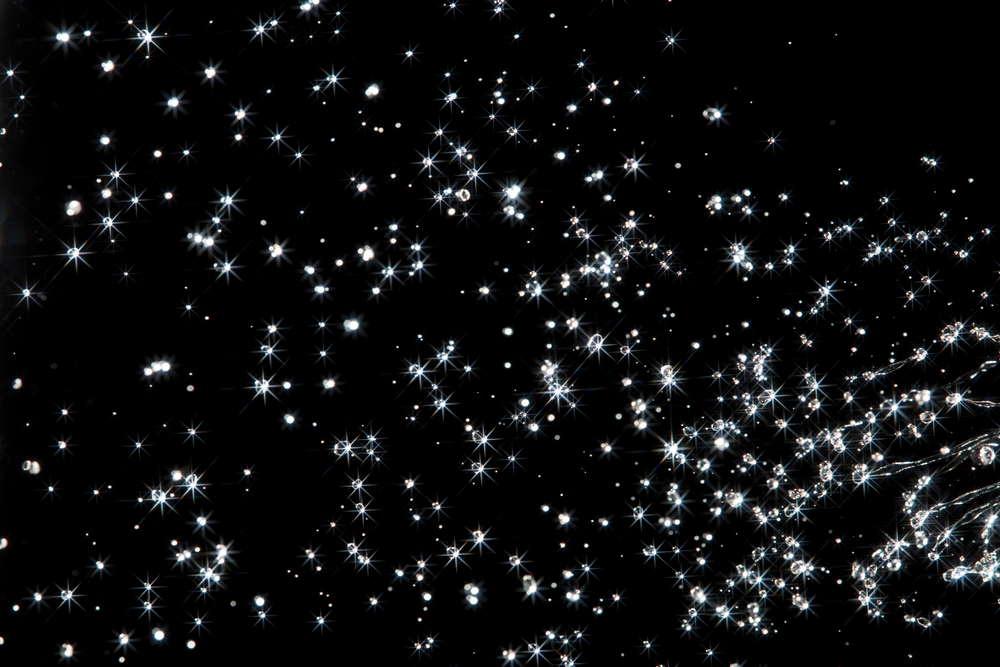
Example: In quantum physics, the term particle is often used to describe tiny units of energy or matter. But this term implies separateness and solidity—suggesting that these entities are “pieces” of something. In reality, quantum phenomena behave more like vibrations within a field. The Mirror Frontier provides a more accurate metaphor: it gives these vibrations their distinctness without implying that they are discrete objects. It defines the boundary of coherence, not the edge of a thing.
Clarification: Is there a place for metaphysical language in empirical science? Science itself is evolving—quantum field theory, systems biology, and complexity science increasingly rely on models of emergence, resonance, and relational boundaries. The Mirror Frontier aligns with this shift. It’s not a replacement for scientific rigor—it’s a conceptual tool that complements it, offering language for phenomena that resist classical description.
Philosophical Note: The Mirror Frontier helps us ask better questions. Instead of “What is this made of?” we ask, “What coherence allows this to exist?” This shift opens new pathways for interdisciplinary insight—bridging physics, metaphysics, and experiential reality.