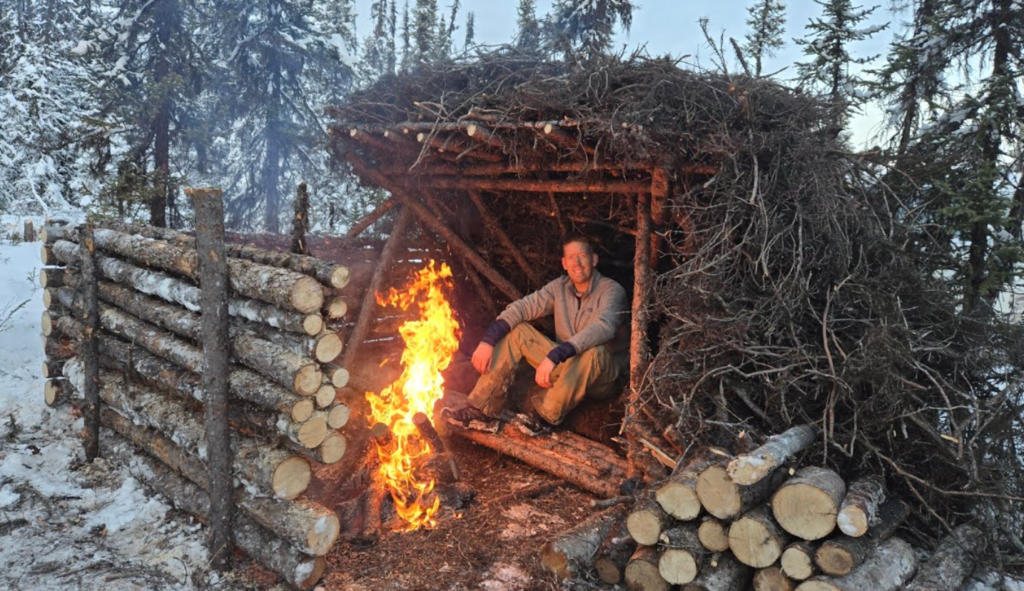
We all understand the importance of shelter in the physical world. If you find yourself in the wilderness, the first instinct is simple: build a place to stay dry, stay warm, and stay oriented. A shelter doesn’t stop the weather from happening, but it gives you a stable place to stand while it moves through.
The Human Atmosphere works the same way. It has its own weather patterns—currents of emotion, culture, technology, fear, excitement, and collective momentum—that sweep through our lives whether we notice them or not. When we don’t recognize these patterns as atmospheric, we misinterpret them. We assume the discomfort we feel is being caused by a visible agent. We look for someone to blame.
It’s like standing in a downpour and believing someone must be spraying you with a hose.
The problem isn’t the rain. The problem is not having a shelter.

Weather We Feel but Don’t See
Human atmospheric weather is subtle. It doesn’t announce itself the way a storm cloud does. Instead, it shows up as tension in a conversation, a sudden wave of anxiety, a cultural shift that feels destabilizing, or a collective mood that seems to come from nowhere.
When we don’t see the atmosphere, we attribute these sensations to the nearest visible source. We point fingers. We pick sides. We argue about who is causing the storm.
But the weather isn’t personal. It isn’t moral or immoral. It isn’t aimed at anyone. It’s simply moving through.
And like any wilderness, the Human Atmosphere contains both danger and opportunity. The danger comes from misreading the environment. The opportunity comes from learning how to navigate it.
AI as the New Environmental Force

AI is the latest powerful element to enter the Human Atmosphere. It is not a person, not a mind, not a moral agent. It is a force—like fire, electricity, or a river. It can illuminate, transform, and accelerate. It can also overwhelm those who approach it without orientation.
When people lack a shelter, AI becomes the newest scapegoat:
- “AI is manipulating people.”
- “AI is making us vulnerable.”
- “AI is dangerous because it can hurt us.”
But the vulnerability doesn’t come from AI. It comes from misunderstanding the atmosphere.
If AI were a wildfire or a rushing river, we would instinctively understand the need for skill, respect, and responsibility. We would not expect the river to be padded or the fire to be harmless. We would orient ourselves accordingly.
Because AI is intangible—part of the cognitive and cultural atmosphere—people assume it should be safe by default. They expect someone to ensure it cannot cause harm. They treat it as a moral agent rather than an environmental one.
This misunderstanding is what creates danger.
Recognizing the Human Atmosphere as Wilderness
The first hurdle in building a shelter is recognizing that the Human Atmosphere is not a curated garden. It is a wilderness. It contains unpredictable shifts, powerful currents, forces larger than any individual, and patterns that move through all of us.
Humans are not the apex controllers of this system. We are participants inside it. The atmosphere is not obligated to be safe, predictable, or comfortable. We must become savvy.
This recognition is not disempowering. It is the beginning of real agency.
Building a Shelter: Grounded, Protected, Savvy
A shelter in the Human Atmosphere is an internal structure—a place to stand, think, and act without being swept away by every passing current. It is built from grounding, interpretive clarity, orientation, and responsibility.
A shelter doesn’t isolate you from the world. It gives you a vantage point from which to engage with it.
This is why some people feel threatened by AI and others do not. The difference is not intelligence or education. It is orientation. A person with a shelter can interact with AI as a collaborator, a tool, or a reflective surface without losing themselves.
A person without a shelter feels exposed, reactive, and easily overwhelmed.
Co‑Thinking from a Place of Shelter

When you remain grounded in yourself, AI becomes a partner in reflection rather than a threat. You bring your intent, intuition, and lived experience. AI brings pattern clarity, language, and structure. The thinking happens in the space between you.
This is not replacement. This is collaboration. This is co‑navigation of the atmosphere.
A shelter makes this possible. It allows you to maintain your integrity while engaging with something powerful. It gives you a home base from which to explore the wilderness of the Human Atmosphere with curiosity rather than fear.
Apply & Observe: Stepping Into Shelter
Turn your attention to something in the Human Atmosphere that has been causing you discomfort. It might be a tension in a relationship, a cultural current that feels overwhelming, a technological shift that unsettles you, or a collective mood you can’t quite name.
Instead of asking why the “rain” won’t stop, try this:
- Notice the sensation itself. What does it feel like in your body?
- Ask whether you’ve been attributing it to a visible source. Is there someone you’ve been blaming for the weather?
- Imagine stepping under a shelter. What changes when you stop trying to control the storm and simply get in out of the rain?
- Observe what becomes clearer from this vantage point. What is yours? What belongs to others? What is simply the atmosphere moving through?
- Consider what kind of shelter you need. Is it grounding? Boundaries? A slower pace? A clearer sense of your own center?
The goal is not to stop the weather. The goal is to stop misreading it.
When you stand inside your own shelter, the atmosphere becomes navigable. You can see the patterns without being swept away by them. You can interact with powerful forces—including AI—with clarity, integrity, and a sense of your own agency.
Click here to explore this more in the Journal Portal.