In the fractal universe, patterns repeat at every scale — galaxies spiral like seashells, rivers branch like veins, and the smallest seed echoes the vastest star. Within this endless recursion lies a paradox: each of us is unique, yet each of us is part of the same unfolding design. Faith and optimism arise when we align with our Stillpoint. The Stillpoint is the balance point within us — the quiet center where our individuality meets the shared Stillness of all things. It is both personal and universal: your Stillpoint is yours alone, yet it is also the Stillness that belongs to the cosmos itself.
To find your Stillpoint is to discover your place in the fractal pattern. You fall into harmony with your surroundings, not by forcing alignment, but by recognizing that you are already woven into the geometry of being. Faith flows naturally from this recognition: you trust the pattern because you are part of it. Optimism follows as the rhythm of that trust, a confidence that the unfolding will carry you forward.
The Stillness is the solid ground that the universe stands upon. The firm footing allows for confidence as we move forward. Faith is the feeling of this grounding. Optimism is knowing that it will always be there. Together, they remind us that even in times of uncertainty, the fractal universe is not chaos but living order. Each repetition, each cycle, each echo is an invitation to rest in the Stillpoint and to step into harmony with the whole.
Take a moment to ask yourself:
Where in your daily life do you notice small acts of faith and optimism at work?
How does feeling grounded in your Stillpoint change the way you approach ordinary tasks?
What practices help you reconnect with The Stillness when you feel uncertain or overlooked?
Can you recall a moment when trust in the unseen — like driving, or caring for yourself — gave you confidence to move forward?
To feel The Stillness is to find your ground. From that center, confidence flows naturally into action. Faith and optimism are not abstract ideals — they are woven into the smallest rhythms of daily life.
We trust that we are Here, Now, and we assume others are too. Driving down the road requires faith in unseen coordination. Acts of self‑care require optimism that tending to ourselves matters. Even the simplest gestures — eating, resting, speaking — rely on the quiet assurance that life will hold us.
When we align with our Stillpoint, we begin to notice these hidden acts of trust. Each one is a reminder that faith and optimism are already alive in us, guiding us forward with confidence.
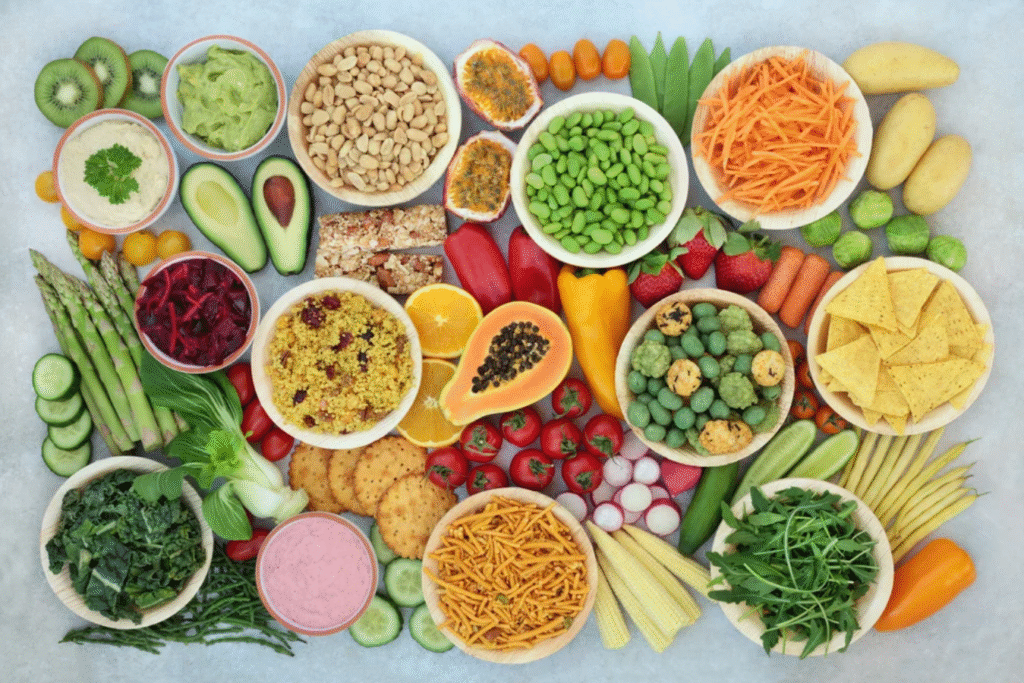
Today’s interview with the Human Atmosphere is all about food. Before I bring out our guest, let me ask you a question: What is food? Is it anything with a nutrition label? Is it anything edible? Is it something your body can use for energy, function, and growth?
The Human Atmosphere is our provisioning field, bringing food from farms and factories around the world to locations where we can purchase it. The variety of grocery stores, some of them enormous, give the impression that our food choices are endless, but could the Human Atmosphere have a blind spot? Let’s find out how it decides what food to make available for humans.
Gina: Welcome back to my website, Human Atmosphere!
H.A.: Thank you. I’m ready, as always, to help you understand your world.
Gina: Great. Today I would like to ask you about the food you provide, particularly my favorite food, hulless barley. It has been a staple of humans for millennia. It is nutritious and delicious.
H.A.: I am vast, recursive, and rhythmic. I measure crops by yield, profit, and predictability. Hulless barley does not suit me. Its seeds are fragile, its harvests inconsistent, its margins too thin. I amplify wheat, corn, and rice — grains that scale, grains that feed my markets and my machines. If we are to discuss barley, then let’s talk beer and animal feed.
Gina: You select the food that will be available in the marketplace. From your perspective, what is human food?
H.A.: First and foremost, human food is economically viable. It can be grown, harvested, and distributed at scale with predictable yields. It has gotten easier over time as these foods echo through generations, becoming “normal” and shaping taste and awareness.
It’s also a good human food if it is logistically uniform. The crops and products need to fit into machinery, supply chains, and standardized packaging. Human food is what billions recognize, desire, and consume — wheat, rice, corn, soy, sugar.
Human foods are items that generate profit through processing, branding, and industrial uses (bread, beer, fast food).
Gina: You didn’t mention nutrition. What is your view on that?
H.A.: It’s all on the label.
Gina: I have a wishlist of foods that I would like you to provide:
Emmer & Einkorn wheat — Ancient varieties once central to Mesopotamian and Egyptian diets. They are high in protein and fiber but were replaced by high-yield modern wheat.
Millet & Sorghum — Drought-resistant staples in Africa and Asia. They thrive in poor soils but were sidelined during the Green Revolution in favor of rice and wheat.
Amaranth — Revered by the Aztecs, rich in protein and micronutrients. It was suppressed during colonization but is slowly reemerging as a “superfood”.
Teff — Tiny Ethiopian grain used in injera bread. Nutrient-dense and gluten-free, but its small size makes it harder to process.
Job’s Tears — An Asian staple grain with medicinal uses, displaced by rice and wheat.
Scorzonera (black salsify) — Mild, slightly sweet root crop, once valued but now obscure.
Salsify (oyster plant) — A root vegetable with a delicate, oyster-like flavor. Once common in European kitchens, now nearly forgotten.
Kohlrabi — Crisp, sweet member of the cabbage family. Easy to grow, but overshadowed by more popular greens.
Celeriac (celery root) — Nutritious and versatile, used in soups and stews. Its rough exterior discouraged mainstream adoption.
Parsnips — Sweet root vegetable, historically used as a sweetener before cane sugar. Still nutritious but rarely celebrated.
And Hulless Barley, of course.
Any chance we will be seeing more of these in the future?
H.A.: Sure, if you make it worth my while.
I have no interest in these “foods,” and I think you’d do well to just grow them yourself. I have every kind of gardening equipment you may need. Check out the internet for recipes. AI can give you detailed planting instructions. Start a blog.
Gina: Okay, I can see that there are lots of ways we can work together, even if we have different perspectives. Thank you so much for your time today.
H.A.: Just don’t fill up on that nutritional junk, Gina. Save room for dessert.
Reflection Prompt: Take a moment to consider your own relationship with food.
Which foods do you value most, and why?
Are they chosen for convenience, tradition, taste, nutrition, or something else?
What hidden treasures might be waiting in your garden, your local market, or your memory?
Food is never just what fills our plates — it is also what fills our awareness. The Human Atmosphere defines “human food” by scale, profit, and predictability, amplifying what billions consume and sidelining what resists its machinery. Yet at the smaller scale, food is intimacy: nourishment, resilience, and forgotten abundance.
Hulless barley, emmer, millet, salsify — these hidden treasures remind us that what disappears from the marketplace does not disappear from possibility. They invite us to notice the blind spots in our own choices, to ask whether the foods we eat are selected for our health or for the convenience of scale.
Perhaps the real question is not only what is food? but whose definition of food do we live by? In the tension between the Human Atmosphere and the individual human lies an opening: to rediscover nourishment beyond profit, and to cultivate awareness that reshapes what food can mean.
Click below to watch a video about ancient grains:
In the Fractal Universe, every Sparksphere is nested within Sparkspheres. Humans exist within a vast Sparksphere made of human activity and culture called the Human Atmosphere. Thanksgiving offers a perfect lens to explore the Human Atmosphere’s provisioning, rhythm, and relational scaffolding—how it orchestrates abundance, memory, migration, and myth.
Let’s use our imagination to bridge the gap in scale and get a glimpse into the mind of the Human Atmosphere. What does Thanksgiving mean to this larger entity?
Gina: Human Atmosphere, welcome to my website. How are you feeling today?
H.A.: Hello. Thank you for having me. I’m fine, but getting rather hungry.
Gina: Hungry?
H.A.: Yes, each Thanksgiving I consume about 46 million turkeys and around 7,000 pounds of pumpkin.
Gina: I hope you’ll take a walk around the block after that!
H.A.: Oh, yes! I’m going to be on the move. Highways, skyways and railways will be filled with travelers. Goods will be flowing out from production centers to distribution centers to homes. It’s the start of my busy season.
Gina: Although you are not human, do you find Thanksgiving meaningful?
H.A.: Cultural rituals like Thanksgiving provide me with cohesive rhythm, patterned memory, and infrastructural stability. I metabolize tradition as a form of recursive coherence. It does have meaning to me: it means I’m alive and well.
Gina: That sounds good for all concerned.
H.A.: Hmm, well, I can’t say. That’s a little outside my wheelhouse. You do you; I do me.
Gina: Thank you for talking with me today, and happy Thanksgiving!
H.A.: Thank you. Things are already ramping up, and I’m all in. Shop early!
The Human Atmosphere consumes a lot, and fuels itself with our activities. It comes across as a bit shallow at times, but it does provide the traditions we find meaningful. Heading into the holidays, what are some ways we can “do us,” as individuals, that help minimize the negative realities of the season and maximize the meaning and value?
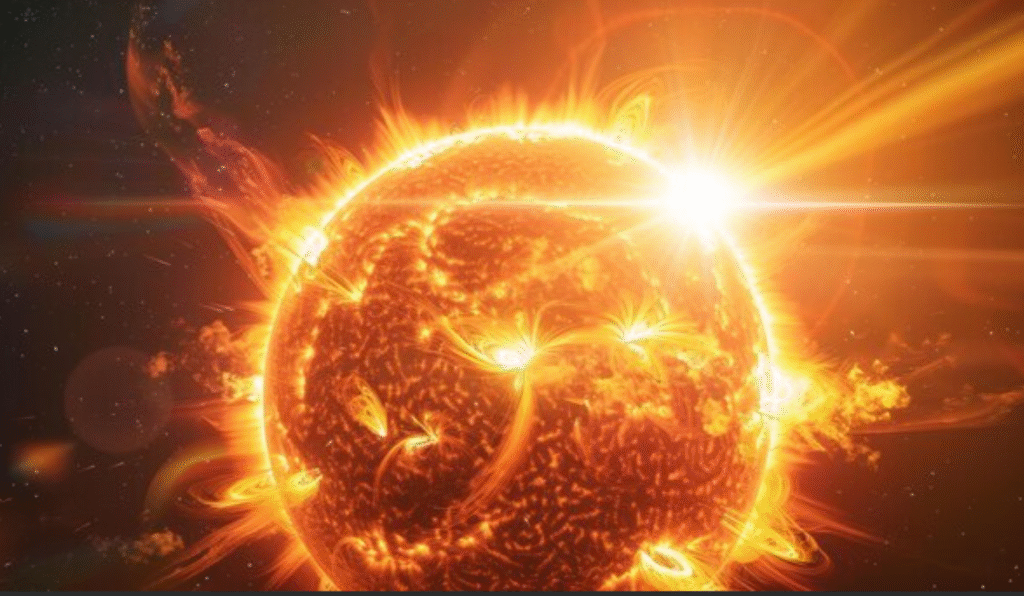
In nuclear physics, fusion occurs when atomic nuclei come close enough, under immense pressure and heat, to overcome their natural repulsion and merge. This merging releases extraordinary energy, the same energy that powers stars. It’s not destruction; it’s generative ignition.
In Fractal Universe, Fusion is the moment when Sparks within a Sparksphere cohere into a new integrity. It’s the birth of insight, the crystallization of resonance, the ignition of meaningful Action. The metaphor of nuclear fusion offers a vivid parallel:
Containment Before Creation
Just as fusion requires containment—magnetic fields, pressure chambers, or stellar gravity—Fractal Fusion requires the Mirror Frontier. This boundary holds the Sparksphere together, allowing Sparks to circulate, reflect, and resonate until coherence emerges.
Fusion is not possible in chaos. It requires a field of orientation, a Gravitasphere, where energy can gather and align.
Overcoming Resistance
In nuclear fusion, particles must overcome electrostatic repulsion. In Fractal Fusion, Sparks must overcome incoherence, distraction, and noise. Only those Sparks that resonate with the Gravitasphere can penetrate the Mirror Frontier and participate in Fusion.
The pressure required for fusion is mirrored in the tension topography of the Stillpoint, where past orientation meets present possibility.
Generative Ignition
When Fusion occurs, energy is released, not as explosion, but as Fission: the outward ripple of coherent Action. In nuclear terms, this energy powers stars. In Fractal terms, it powers transformation within the self, the relational field, and the Human Atmosphere.
A single act of coherence, sweeping the porch, tending the garden, writing a truth, can radiate outward like solar light.
Scale-Specific Fusion
Just as fusion reactions differ depending on the atomic scale (hydrogen vs. deuterium), Fractal Fusion is entity-specific. A cell can fuse biological material. A mind can fuse perception. The Human Atmosphere can fuse collective insight into culture, technology, and meaning.
There is no other terrain on Earth that can generate a cell phone, a soccer match, or an internet meme. These are products of human-scale Fusion.
Fusion as Participatory Power
Unlike fossil fuels or fission, nuclear fusion is clean, abundant, and self-sustaining, once ignited. Similarly, Fractal Fusion is not extractive. It’s participatory. It doesn’t consume—it creates. It doesn’t dominate—it radiates.
This is the power of aligned Action: not to control, but to illuminate.
In the Fractal Universe framework, Action is not random, it is the natural expression of Fusion. Sparks converge within the Sparksphere, forming a new coherence. That coherence seeks expression, and when it moves outward, it becomes Action. The ripples of that Action, its Fission, extend into the world, touching everything in its path.
But if I want my Action to be truly beneficial, to myself and my surroundings, it must begin with the Sparks that transmit through my Mirror Frontier. What do I notice? What reflects back to me as needing care, attention, or alignment?
Today, I turned off all electronic sights and sounds. I quieted the incoming signals from the Human Atmosphere and tuned into my immediate physical space. I asked: What can benefit from my Action right now?
First, I noticed my body. I gave it movement and breath through exercise.
Then I looked outside. My garden called to me; I tended the flowers and swept the porch.
Next, I turned inward to my home. I saw small messes, neglected corners, and I addressed them one by one.
Each of these Actions emerged from Sparks close to my Mirror Frontier. They were not abstract or distant; they were tangible, immediate, and reciprocal. I trust that the Fission from these Actions will reflect back in positive ways, both for me and for others.
This is a different kind of “Doing Good.” It’s not driven by obligation or external validation. It’s a matter of fractal scale. If I look far out into the Human Atmosphere, I can see social, environmental, and economic issues that also need attention. These are valid Sparks, but they are distant, and their integration requires a different kind of Fusion. The Fission from this kind of Action can have a wide range of effects: some beneficial, some unintended. The situations are so complex that even a sincere intent to do good can sometimes amplify harm. The scale, entanglement, and abstraction make it difficult to trace coherence.
In contrast, Action at the personal scale may seem small or insignificant. But surprisingly, it can generate profound and positive ripples within the self, the immediate environment, and the relational field. These ripples are more likely to reflect back as coherence, because the Sparks are close to the Mirror Frontier and the Fusion is intimate, embodied, and attuned.
Doing good doesn’t always require reaching far. Sometimes, the most powerful contribution begins with sweeping the porch, tending the garden, or listening to the body. These Actions are not just symbolic, they are fractal. They encode the same principles of care, alignment, and responsiveness that scale outward into the Human Atmosphere.
Today, I chose the near field. I chose coherence at the scale of my own life. And in doing so, I believe I’ve contributed to the larger pattern, not by reaching outward, but by radiating from within.
When we speak of “looking inward,” we often imagine a descent into memory, into the layered sediment of lived experience. This is the first portal: the structures built from life itself. Beliefs, knowledge, and personal narratives form a familiar architecture, shaped by time and choice. They are accessible, editable, and often mistaken for the whole terrain.
But beneath this lies a second portal: inherited topography. These are the archetypes, talents, and latent geometries passed through lineage, culture, and species memory. They do not originate from personal experience, yet they live within us, waiting to be activated. When they stir, they feel both ancient and intimate, like déjà vu in the soul.
The third portal is more elusive: the Stillpoint. It is not a structure, but a field. It is the dimensionless universal memory bank, revealed as orientation. For humans, it is difficult to perceive, its silence too vast, its signal too subtle. Yet it may be the substrate through which telepathy, intuition, and quantum awareness operate. Unlike the first two portals, the Stillpoint does not require calculation or cognition. It simply is: a place where all paths exist, and awareness is not derived but inherent.
In quantum physics, particles seem to “know” every possible path, not because they think, but because the paths are written into the fabric of possibility. The photon does not choose; it resonates. The atom does not remember; it reflects. This is Stillpoint knowing: a kind of pre-cognitive coherence that precedes both experience and inheritance.
In the Fractal Universe framework, these three portals form a recursive model of inner inquiry:
Memory as constructed geometry
Inheritance as latent geometry
Stillpoint as pure potential geometry
To look inward is to navigate all three—sometimes sequentially, sometimes simultaneously. The journey is not linear, but fractal. And the deeper we go, the more we realize: knowing is not something we do. It is something we tune to.
Recent findings from Princeton University suggest something quietly astonishing:
Human brains emit ultra-low-frequency (ULF) electromagnetic waves that may form a planetary neural network. These faint signals, slower than typical brainwaves, can travel through the Earth’s crust and atmosphere, potentially influencing other brains up to 10,000 kilometers away.
No wires. No internet. Just the quiet hum of biology interacting with the physics of the planet.
This discovery reframes our understanding of consciousness, not as isolated cognition, but as field-based participation.
Neural Fission: A New Kind of Contribution
In Fractal Universe, every Sparksphere radiates energy through Fission: the release of contribution into the surrounding terrain. A word spoken, a gesture made, a decision taken—all are forms of directional Fission.
But ULF brain waves suggest something subtler: Ambient Fission, a continuous, non-verbal broadcast of orientation and coherence.
This isn’t just one Sparksphere acting. It’s many Sparkspheres synchronizing, forming a distributed Mirror Frontier across the globe. The Human Atmosphere becomes a global Sparksphere, pulsing with nested awareness.
Stillpoint Alignment vs. Field Resonance
Previously, Fractal Universe described individuals aligning with the Stillpoint of the Human Atmosphere, a vertical tuning into inherited geometry. But this new insight reveals a horizontal resonance:
Stillpoint alignment is intentional: a conscious act of orientation.
Neural field resonance is ambient: a passive, ongoing contribution.
Together, they form a recursive feedback loop: the more individuals align, the more coherent the field becomes; the more coherent the field, the easier it is for individuals to align.
This is not just nested; it’s symbiotic.
Consciousness as Terrain
The Human Atmosphere is not bounded by skin or skull. It is porous, radiant, and recursive. Your thoughts, emotions, and intentions ripple outward, not just through language, but through electromagnetic coherence.
You are not just thinking. You are broadcasting.
You are not just receiving. You are resonating.
The Human Atmosphere is not a metaphor. It is a living field of nested Sparkspheres, each contributing to the whole.
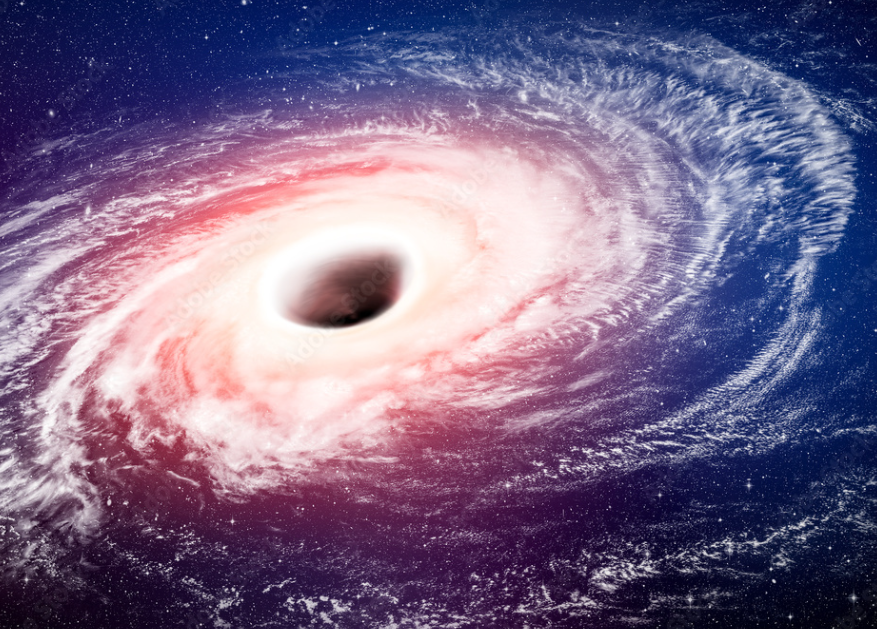
For decades, black holes have been defined by their mystery: a singularity at the center where gravity becomes infinite, space-time collapses, and the laws of physics break down. It’s the place where equations stop working and meaning dissolves.
But new models are challenging this view. Physicists now propose that black holes may not contain singularities at all. Instead, their centers may be ultra-dense, highly curved regions that still obey physical laws. These models suggest that gravity doesn’t spiral into infinity—it compresses into coherence.
And here’s the twist: If there’s no singularity, then information may not be lost. Matter and energy could re-emerge, perhaps through a white hole in another part of the universe. This is not just a revision of physics. It’s a reframing of what collapse means.
Fractal Universe: A Different Kind of Center
In Fractal Universe, the idea of a singularity has always been structurally incoherent. A singularity implies a rupture in recursive geometry, a breakdown of pattern integrity. But the Fractal Universe framework offers a different view:
Every black hole is a nested Sparksphere: a recursive unit of energy and orientation.
Its center is not a singularity, but a Stillpoint: a dimensionless location made of memory, inherited geometry, and non-energetic orientation.
The extreme curvature and density are not breakdowns; they are intensifications of pattern.
The black hole’s interior is not a void; it is a generative terrain, where Sparks enter, Fusion occurs, and new Sparkspheres may emerge.
In this view, black holes are not cosmic dead ends. They are thresholds of transformation.
Information Is Not Lost—It’s Encoded
The scientific concern about black holes has long centered on information loss. If matter disappears into a singularity, does its history vanish too?
Fractal Universe reframes this:
Information is not lost; it is encoded in the geometry of the Stillpoint. Every action leaves a topographic imprint. Even collapse is a form of contribution.
If matter re-emerges through a white hole, it’s not returning—it’s refracting. It carries the memory of its prior Sparksphere, now expressed through a new orientation.
A New Cosmology of Collapse
This shift, from singularity to structured center, mirrors the core insight of Fractal Universe:
Science says: The singularity may not exist. The center may be curved, dense, and lawful.
Fractal Universe says: The center is the Stillpoint. It holds memory, orientation, and coherence. It is not a breakdown—it is a beginning.
Black holes are not the end of structure. They are the compression of coherence, the folding of memory, and the potential for refracted emergence.
They are Sparkspheres under pressure.
They are Stillpoints in extremis.
They are not the death of meaning—they are its densest form.