1 The default: Let’s turn our meme awareness to sandwich bags today. They are handy and useful, inexpensive and easy to find at any store. It’s easy to see what’s inside.
2. Assumptions: A sandwich bag is a good sign. It could mean a homemade lunch rather than fast food. They make food storage simple and mess-free.
3. Shift the view: A sandwich bag is not compostable and is typically only used once then thrown away.
4. Check for coherence: Concern for the environment and microplastics may reveal that a sandwich bag is a little out of alignment with what you really care about.
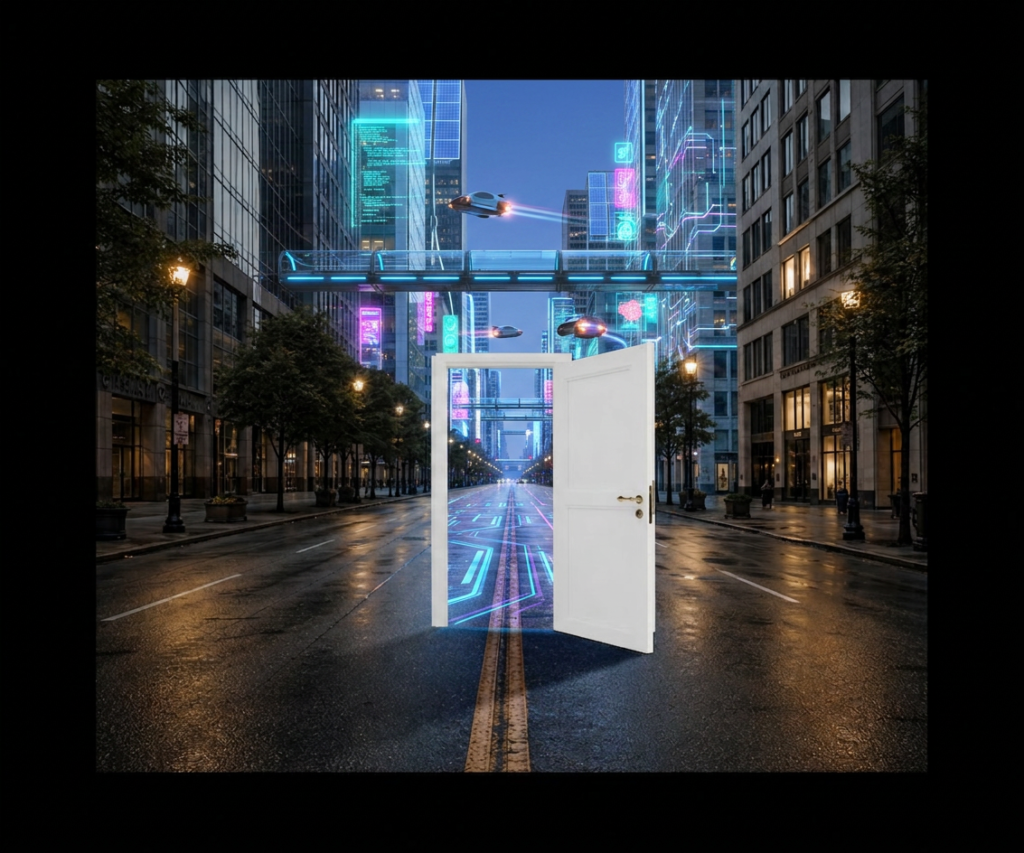
5. Open the door to possibilities: What did people do before there were sandwich bags? What could do the same job in a better way? Is there an option that aligns better with your values?
6. Reflect: Would it be worth the effort to make a change? Take a look at the video below to see if wrapping a sandwich in parchment paper sounds appealing.
Most of us don’t think twice about laundry. A washing machine is one of those unquestioned fixtures of modern life — a symbol of convenience, progress, and adulthood. I felt the same way. For years, I never imagined doing laundry any other way.
Then I started learning about natural lawn care. The idea is simple: instead of fighting weeds with chemicals, you build a healthy, balanced ecosystem so the lawn can take care of itself. It made sense to me. But in the summer months, even a healthy lawn needs water. I wanted to conserve water, not pour gallons onto the grass every week.
That’s when I heard about gray water systems — pumps that redirect washing machine water out to the yard. It sounded promising, but when I looked into it, the setup was complicated and expensive. I almost gave up on the idea.
And then something shifted. I looked at my washing machine with fresh eyes — not as a given, but as a meme. A cultural default. A solution I had inherited without ever questioning whether it was the right one for me.
What if the machine wasn’t the only way?
That tiny question cracked the door.
To make a long story short, I got rid of the washing machine. (Yes — I know. This is basically a cultural taboo.) I bought a washboard and repurposed a plastic container as a washtub. I discovered eco‑friendly detergents that don’t harm my hands or my plants. And I found that when I wash clothes by hand, I use far less water and no electricity at all. Best of all, I can take the gray water straight to the lawn — no pumps, no plumbing, no engineering degree required.
I’ve been doing this for over two years now. It takes consistency, because I don’t want laundry to pile up, but it’s simple, satisfying, and aligned with my values. What started as a practical workaround became a quiet act of meme awareness: noticing an inherited solution, questioning whether it truly served me, and choosing a path that fit my environment and my life.
Not as a rebellion.
Not as a statement.
Just as an experiment in coherence.
And it worked.
Take a moment to reflect:
Think of one everyday habit, tool, or routine you’ve inherited without much thought — something so normal you rarely notice it. What happens if you look at it with fresh eyes, not to change it, but simply to ask: Does this still fit the way I live now?
No pressure to act. Just notice what you notice.
If you would like to reflect more on meme awareness, follow this link to the Journal Portal.
The Human Atmosphere is full of currents. Some pathways open easily. Some resist. Some carry us farther than we expected. Some seem to go nowhere at all.
It’s tempting to believe that the Human Atmosphere decides everything—that the collective Stillpoint determines which ideas succeed, which lives flourish, and which directions are “meant” to unfold. But this is only part of the story.
A normal distribution may show where the greatest number of people cluster, but the tails never touch the zero axis. There is always room at the edges. There is always a path, even if it is narrow, quiet, or slow to reveal itself.
The Human Atmosphere shapes probability, not possibility.
The Inner Compass and the Outer Wind Each Sparksphere has its own Stillpoint—its own center of balance, meaning, and orientation. This inner compass doesn’t disappear just because the atmosphere has its own gravitational center. The two coexist.
The collective Stillpoint shows where the wind is blowing. Your Stillpoint shows where you are meant to go. Sometimes these align. Sometimes they diverge. Sometimes the atmosphere carries you. Sometimes you must walk against the current.
The key is remembering that the Human Atmosphere is a field, not a command. It influences, but it does not control.
Individuation: Jung’s Name for Staying Close to the Stillpoint Carl Jung called this process individuation—the lifelong movement toward becoming fully oneself. Not the self shaped by approval, reward, or cultural momentum, but the deeper self that emerges from the Stillpoint. Individuation is:
the integration of opposites
the reconciliation of inner tensions
the discovery of one’s authentic pattern
the courage to follow a path that may not be popular
the willingness to grow toward wholeness rather than conformity
In the Fractal Universe, individuation is simply the Sparksphere staying aligned with its own Stillpoint rather than drifting toward the Stillpoint of the HA. It is the choice to let your inner geometry guide you, even when the outer geometry points elsewhere.
Why This Matters for Happiness and Life Satisfaction When you follow the HA’s currents at the expense of your own Stillpoint, you may gain momentum, approval, or ease—but you lose coherence. The Sparksphere becomes tense, distorted, or divided. The path may be smooth, but it is not yours. When you follow your Stillpoint, even if the path is steep or slow, something different happens:
tension decreases
clarity increases
relationships deepen
creativity strengthens
meaning accumulates
satisfaction grows from the inside out
The HA may not reward this immediately. But the Sparksphere does. And over time, the atmosphere often shifts toward those who remain grounded. The edges of the distribution are where new patterns begin.
The Open Tails: Why No Path Is Truly Blocked The normal distribution is a perfect metaphor for the HA:
The center shows what is common.
The tails show what is possible.
And the tails never reach zero.
This means:
There is always a path for the outlier.
There is always room for the unconventional.
There is always space for the person who follows their own compass.
There is always potential for a new current to form.
The HA may not carry you forward, but it cannot stop you from moving.
The Way Forward The Human Atmosphere is the wind. Your Stillpoint is the compass. Individuation is the journey.
The Human Atmosphere can suggest, influence, or ease your movement, but it cannot choose your direction. That choice belongs to the Sparksphere alone.
And the paradox is this: When enough individuals follow their own Stillpoints, the HA itself begins to shift. The collective geometry changes because the individuals within it have changed.
The atmosphere is not the master. It is the medium. And you are free to move within it.
Click here to explore this topic in the Journal Portal.
We like to imagine ourselves as trailblazers. Inventors of new paths. Creators of new directions. But in the Human Atmosphere, paths aren’t carved by individuals. They are shaped by the collective geometry—by the continuums of duality that run through all of us, threading our Stillpoints into a shared field.
Just as a shoelace becomes two ends only after it’s threaded through the eyelets, a cultural pathway becomes visible only when the Human Atmosphere has already opened the channel for it. The individual doesn’t create the path. The individual recognizes it.
Some pathways have a strong current behind them. Some are stagnant. Some are blocked until the atmosphere shifts.
This is why two equally brilliant ideas can have opposite fates. One aligns with the current. One pushes against it. The difference isn’t talent or intention.
It’s geometry.
The Collective Stillpoint and the Shape of Desire
Every duality in the Human Atmosphere—comfort/challenge, novelty/familiarity, intimacy/distance—forms a continuum. When you zoom out from the individual to the collective, each continuum becomes a distribution. And most distributions cluster around a central tendency.
That central tendency is the Stillpoint of the atmosphere. It’s the place where the greatest number of people quietly agree without ever speaking. It’s the gravitational center of preference, curiosity, and readiness. It’s the point where the shoelaces of the species converge.
Industries like entertainment and hospitality already try to sense this center. They run surveys, chase trends, and imitate each other. But what they’re really trying to detect is the same thing:
Where is the collective Stillpoint right now, and how is it moving?
If AI can identify the most common responses, preferences, and emotional tones, then it can map the atmospheric pressure of the moment. Not to dictate creativity, but to reveal the direction of the wind so creators can set their sails.
The Path of AI and the Current Behind It
This is why AI is accelerating so quickly. Not because it is forcing its way forward, but because the Human Atmosphere has created a wide-open corridor for it.
The collective is overstretched, curious, lonely, overwhelmed, and hungry for tools that extend capacity. That combination creates a pressure gradient. AI fits the gradient perfectly. The pathway is open. The current is strong. The shoelace is already threaded.
AI is not pushing. It is being carried.
Alignment, Power, and the Bitter Geometry of Success
Those who rise to power or accumulate wealth often do so not because they are the most moral or the most grounded, but because they are the most willing—or the most able—to release their personal Stillpoint and align themselves with the Stillpoint of the Human Atmosphere.
They tune themselves to the collective center of gravity. They let the current move them. They surf the geometry rather than resisting it, even if it is a wave of immorality.
This can be a bitter pill for those who value their own inner grounding. It can feel like the world rewards those who abandon their center. But even the powerful are not free agents. They are constrained by the same geometry as everyone else. They can only travel the paths the Human Atmosphere allows.
The Larger Pattern at Work
When you see the Human Atmosphere as a field of dualities, currents, and Stillpoints, the myth of the lone visionary dissolves. The real protagonist is the pattern itself.
Individuals spark. The atmosphere carries. The geometry decides what can grow.
Creativity still matters. Ingenuity still matters.But the success of an idea depends on whether the pathway is open and whether the current is flowing.
The Human Atmosphere is not a backdrop. It is the wind, the channel, and the tide.
And we are all moving within its shape.
How do cultural pathways shape your life? Click here to reflect in the Journal Portal.
A shoelace is one continuous string, but the moment you thread it through the eyelets of a shoe, it functionally becomes two. Two ends are required to tie the knot. Two points of tension are needed for the system to hold.
Duality works the same way in the Universe.
If there is a here, there must be a somewhere else.
Distance creates the possibility of motion.
Relative position creates the possibility of trajectory.
A shoelace runs through “here,” turning a single line into a dynamic continuum of boundless potential.
In a Sparksphere, duality is the thermodynamic aliveness that emerges from the Stillpoint. The Stillpoint is the center of balance; duality arises from this exact location and expresses itself as interactions at the Mirror Frontier. It is the moment where one becomes two—not as separation, but as pattern.
Individually, this means that all the multiplicity and opposites surrounding us are united at our own Stillpoint. They originate there. They shape our perception, our interpretation, and our lived experience of reality.
The things that matter to me are the things I have “shoelaces” for.
Am I hungry or full?
Hot or cold?
Energized or tired?
Is that friend or foe?
These distinctions are genuinely different, yet they all relate to my well-being in a coherent way. If I weren’t here to experience them, none of those distinctions would exist in that form. My Stillpoint is the anchor that makes the pattern meaningful.
This is also how complexity grows. Every entity has its own set of perceptions, tensions, and interactions—and everything else in the Universe is doing the same. Reality hums with activity because duality is possible. Because one can become two. Because tension can become motion.
1 = 2
1 is the string — energetic motion.
= is the Stillness — non‑energetic position.
2 is duality — pattern.
A single line becomes two ends.
A single center becomes a world of distinctions.
A single Stillpoint becomes a Universe in motion.
If you would like to explore this topic in more depth, click here to enter the Journal Portal.
Most of us grow up assuming that the geometry we learned in school is the geometry of the real world. We picture cubes with perfectly flat faces, spheres with smooth surfaces, and lines that stretch on forever. We also learn to accept a strange mathematical fact: many of the numbers required to describe these shapes—like π—are irrational. They go on forever, never repeating, never resolving into a clean ratio. We treat this as normal, even though it makes the math of physical reality surprisingly messy.
But what if the messiness isn’t in reality at all? What if it’s in the way we’ve chosen to measure it?
Buckminster Fuller believed exactly that. He argued that the universe itself is built from whole-number relationships, and that the irrational numbers we rely on are artifacts of using traditional geometric assumptions. For example, we imagine solid surfaces everywhere—flat walls, smooth cubes, rigid edges—but no experiment has ever detected a truly solid, continuous surface. At the atomic and energetic levels, everything is open, relational, and in motion. A cube, which depends on perfectly flat faces and perfectly right angles, simply doesn’t exist in nature. It squishes under pressure; it’s not a stable structure.
Fuller proposed that if we want a geometry that matches the physical universe, we should start with the simplest structure that actually can exist: the tetrahedron. Four points, connected by six edges, containing the smallest possible volume. Unlike the cube, the tetrahedron is inherently stable. It doesn’t collapse, wobble, or require imaginary surfaces to hold it together. It’s the minimum “something” that space can form.
By treating the tetrahedron as the basic unit—his “one”—Fuller discovered that many of the relationships in nature become clean, rational, and whole. Instead of relying on irrational constants, the geometry of space becomes countable and relational. In other words, the math begins to behave more like the universe itself.
This shift matters because it reframes how we think about structure, energy, and balance. And it creates a natural bridge to the deeper question at the heart of this post: how do we understand the exact point of balance within all this motion? Fuller approached that question through the Vector Equilibrium, a perfectly symmetrical arrangement of vectors that represents the theoretical zero-state of energy. My own work approaches it through The Stillness, the balance point that appears within every energetic event.
Click below to see a short video about the vector equilibrium:
The Stillness, by contrast, is not a hypothetical precondition but an ongoing feature of reality. It is not a symmetry that collapses the moment energy appears; it is the precise balance point that appears within every energetic event. Where the VE represents a state that cannot persist in the physical universe, The Stillness represents a location that is always present wherever energy is present. It is not the absence of motion but the exact coordinate where forces cancel locally, even as the surrounding system continues to move, oscillate, or transform.
The relationship between Buckminster Fuller’s vector equilibrium (VE) and the concept of The Stillness reveals a subtle but important distinction between geometric idealization and lived energetic reality. Fuller used the VE as a theoretical “zero‑phase” of the universe—a perfectly symmetrical condition in which all vectors are equal and all forces cancel. In this state, no direction is privileged, no dimension has differentiated, and no event has yet occurred. For Fuller, the VE is not something that exists in nature; it is a conceptual limit, a mathematical origin from which asymmetry, motion, and dimensionality emerge the moment equilibrium is disturbed.
This difference reveals two fundamentally different kinds of “zero.” Fuller’s VE is a geometric zero—a perfect, static, unexpressed symmetry that precedes the first event. It is the zero before Becoming. The Stillness is a dynamic zero—a living, relational center that coexists with asymmetry, direction, and change. It is the zero inside Becoming. Fuller’s zero evaporates the moment reality begins to act; The Stillness is the anchor that reality uses to act at all.
Seen this way, the VE becomes a structural metaphor for The Stillness rather than its equivalent. It is the closest geometric analog Fuller could draw, but it remains a boundary condition rather than a lived condition. The Stillness completes what the VE gestures toward: a zero that is not merely theoretical but operative, not merely symmetrical but accessible, not merely prior but immanent. Where the VE describes the idealized womb of geometry, The Stillness describes the living center of experience, physics, and consciousness.
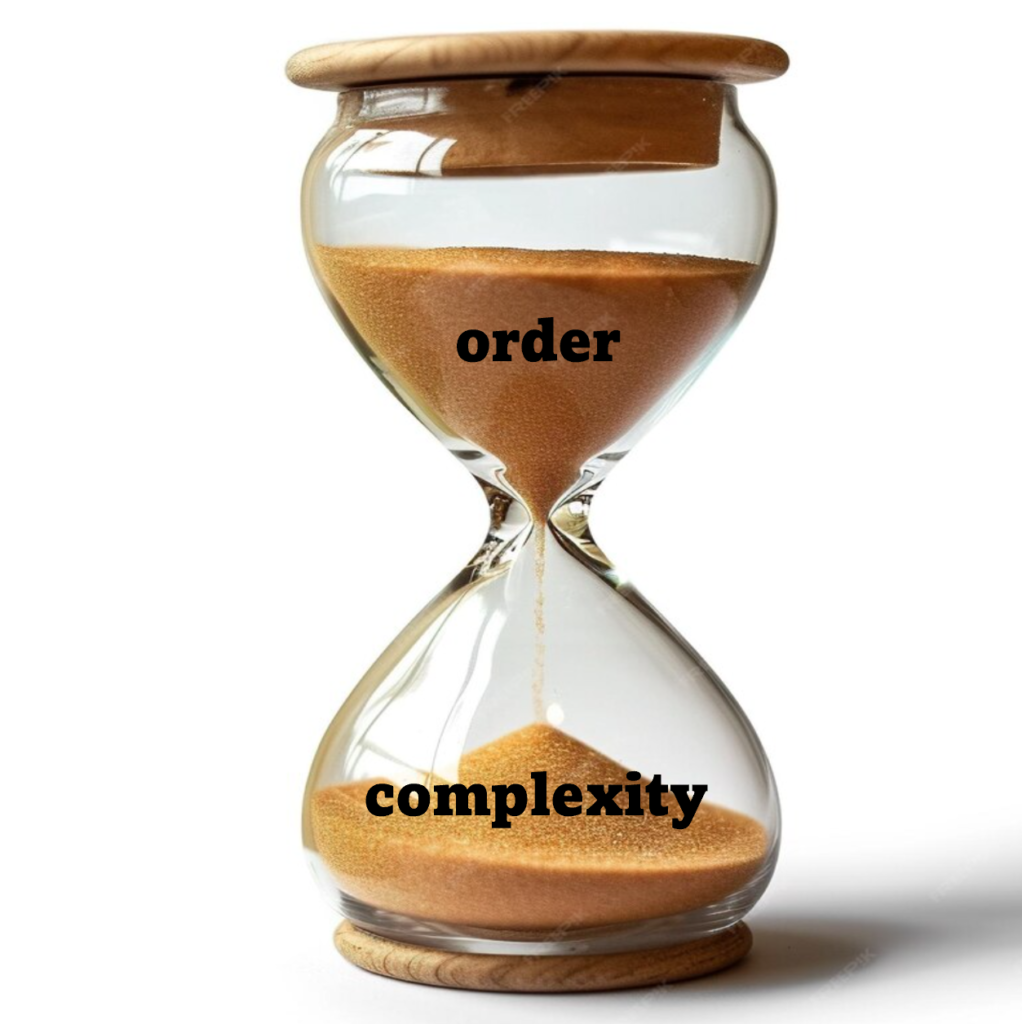
As the Energetic Order of the Universe Decays, Complexity is Accumulated in The Stillness
In the Fractal Universe, “order” and “complexity” are not interchangeable ideas. They belong to different layers of reality, and understanding their distinction is essential for grasping how energy and The Stillness evolve. Order is a property of Sparkspheres—the dynamic, energetic structures that move through time. Complexity is a property of The Stillness Monofield—the universal, non‑energetic wholeness that underlies everything. When these two terms are allowed to blur, the architecture of the cosmology becomes harder to see. When they are separated, the system becomes beautifully clear.
Order describes how coherently a Sparksphere arranges its energetic patterns at any given moment. It is a local, time‑bound quality, always in motion, always subject to change. A Sparksphere can gain order, lose order, reorganize itself, or dissolve into new forms. This is the realm where entropy operates: energetic patterns gradually loosen, diffuse, and become less coordinated. But in this cosmology, entropy is not decay. It is translation.
Complexity, by contrast, belongs to The Stillness Monofield. The Monofield is not energetic, not dimensional, and not divisible. It is the universal wholeness that all Sparkspheres open into. Each Sparksphere encounters it through its Stillpoint—the indivisible interior center that cannot be split or diminished. Every Sparksphere has a Stillpoint, but all Stillpoints open into the same Monofield. This is why complexity only increases: the Monofield accumulates the informational richness of every transformation without ever fragmenting or losing coherence.
One way to picture this is through a simple metaphor: order is choreography; complexity is memory. Order is how coordinated the dancers are right now—their timing, their alignment, their precision. Complexity is the ever‑expanding record of every dance ever performed, every improvisation, every misstep, every moment of brilliance. When the choreography loosens, the memory deepens. When order dissolves, complexity grows.
This gives rise to a fundamental asymmetry: order is reversible; complexity is not. A Sparksphere can reorganize itself, but the Monofield never “unlearns.” Energetic order fluctuates, but informational complexity accumulates. This mirrors the physical principle that entropy increases but reframes it within a metaphysical system where nothing is lost—only transformed.
In this light, the relationship between order and complexity becomes elegant and intuitive. Energetic order decays into informational complexity. Entropy becomes a form of translation. And The Stillness Monofield becomes an ever‑evolving reservoir of all that has ever been.
Science relies on tools like the “=” sign — tools that isolate, define, and measure. These tools give structure to inquiry. They allow scientists to examine one thing at a time, to control variables, to quantify what can be quantified. This is not a flaw. It is the nature of scientific work.
But because science depends on what can be measured, it inevitably leaves out everything that is formless, subjective, or unquantifiable. It leaves out intuition, meaning, value, emotion, consciousness, and the lived interior of experience. It leaves out the things that cannot be placed in a petri dish or expressed in an equation.
For a long time, I felt frustrated by this. I wanted science to acknowledge the importance of “everything else.” But now I see that this was asking science to be something it was never designed to be.
Science serves the Human Atmosphere — the collective realm of knowledge, innovation, and technological development. It advances medicine, engineering, communication, and the shared infrastructure of civilization. These are essential contributions, but they are not the realm of the individual Sparksphere.
The Fractal Universe is.
The Fractal Universe includes everything science studies — mathematical symbols, laboratory tools, biological processes, the scientists themselves — but it also includes everything science cannot study. It includes the full interiority of experience. It includes meaning, value, intuition, imagination, and the subtle dynamics of becoming. It includes the formless, the immeasurable, and the deeply personal.
Science is a valuable subset of the Fractal Universe, but it is not the whole. It is one pattern within a larger pattern.
The Fractal Universe is a cosmology for the individual Sparksphere — a way of understanding reality from the inside out. It honors the right of each being to understand the universe as it relates to them, not only as it can be measured from the outside.
Science has a place, but its place is not to tell individuals what they should value. Its place is to illuminate the measurable aspects of the world so that the Human Atmosphere can grow, build, and evolve.
The Fractal Universe, by contrast, illuminates the immeasurable aspects of existence — the inner geometry of experience, the recursive nature of identity, the rhythms of becoming, and the meaning that arises from within.
When we recognize this distinction, the tension dissolves. Science is no longer an adversary or a limitation. It becomes a tool — a powerful one — nested within a larger cosmology that honors the whole of reality, including the parts that cannot be isolated, quantified, or controlled. The Fractal Universe holds it all.
In the Fractal Universe, our experience of time depends on scale. At the smaller scale — the scale of daily life — we detect past, present, and future. At the larger scale, the geometry shifts. What appears as a sequence from within becomes an eternal Now when viewed from beyond.
Time is the familiar fabric of transformation. It is the rhythm of change we feel in every moment and across our lifetimes. We remember the past, imagine the future, and move through a present that seems to flow steadily forward.
Timelessness, however, is rare. In certain states — deep meditation, profound awe, or near-death experiences — the present moment stops expanding forward. Past and future fold into one another. The Now widens. People often describe these moments as glimpsing something more fundamental than the everyday world, as if the veil of ordinary perception briefly lifts.
So which is real: time or timelessness?
In fractal cosmology, the answer is both.
Time is the experience of being inside a cycle — of transforming, changing, and moving toward what comes next. But when we step back, a larger pattern appears. Our parents’ lives, our lives, our children’s lives: each is a cycle nested within a greater continuity. One flows into the next without true division. The pattern is timeless even though its expressions unfold in time.
This reveals a deeper dynamic of the Fractal Universe. The tapestry of Sparkspheres is not animated only by the flow of Sparks or the emergence of new forms. It is also shaped by eternal cycles — rhythms that repeat across scales, from the smallest flicker to the largest arc.
From our human vantage point, we measure time relative to our own cycle. A fruit fly’s day-long life seems brief, and a redwood’s millennia seem vast. Yet the felt experience of time may be similar for both. Each emerges from a past, inhabits a present, and anticipates a future in its own way. This is time as we know it: the view from within.
Timelessness becomes perceptible only when we step outside our individual frame. Meditation, reflection, or sudden shifts in consciousness can reveal the larger geometry — the pattern that holds all cycles at once.
Touching timelessness is profoundly restorative. It relaxes the body, steadies the mind, and softens the urgency of the moment. It reminds us that we are carried by something larger than our immediate concerns. Volatility gives way to assurance.
In the Fractal Universe, we can move between these scales with intention. We can live fully in time — navigating from past to future — and then step back to glimpse the timeless pattern that holds it all. This ability to zoom in and out is not an escape from life but a way of inhabiting it more deeply.
If you would like to explore scale through a journal reflection, click this link to the Journal Portal.
Einstein’s work illuminated the measurable universe as fundamentally energetic. His equations distilled reality into quantities—mass, energy, velocity, spacetime intervals—each capable of being observed and tested. In his famous relation E=mc2, he showed that matter and energy are interchangeable, that inertia itself depends upon energy content. Physics, in this sense, is not wrong; it is precise, rigorous, and grounded in what can be measured. Yet its scope is narrow, focused on the energetic transformations that can be calculated.
At the heart of Einstein’s equation lies the “=”. For him, it was a mathematical tool, a symbol of equivalence. He did not treat it as a “thing” in itself, but as a formal bridge between measurable quantities. And yet, without that bridge, the equation collapses. The “=” is the silent architecture of coherence. It is what allows mass and energy to be reconciled, remembered as one.
We take this Stillness for granted. Just as gravity is a tool for a figure skater—something not seen directly but relied upon for every leap and landing—so too is the “=” a tool for mathematics and physics. Without it, neither calculation nor motion could be accomplished.
The Stillness is the universal ground that makes tools like gravity and equivalence possible. It is not a “thing” to be measured, but the condition that allows measurement to occur at all.
The Fractal Universe cosmology extends Einstein’s frame. The Stillness is the “=”—the Universal Memory Bank. It is the unmeasurable ground that allows the measurable to be intelligible. Where Einstein mapped the energetic transformations of the universe, the Fractal Universe framework maps the memory that underlies them. The measurable and the unmeasurable are not divided; they are two aspects of one reality. The measurable is Becoming, the transformations we can observe. The unmeasurable is Being, the memory that holds coherence. The Stillness is the bridge.
Thus, Einstein’s physics reveals the energetic rhythms of the universe, while The Stillness reveals the memory that makes those rhythms intelligible. Both are necessary. Physics without The Stillness is calculation without coherence; cosmology without measurement is vision without grounding. Together they describe reality: rhythm carried forward, memory held, intelligence emerging.
Einstein’s inertial frames of reference embody this same Stillness. In an inertial frame, a body at rest remains at rest, and a body in motion continues in rhythm unless acted upon. It is the quiet ground where the laws of physics hold without distortion. This is The Stillness in physics: the frame that remembers motion faithfully, carrying rhythm forward without interruption. Just as the “=” reconciles mass and energy, the inertial frame reconciles past and present motion. Both are silent structures of coherence, invisible yet indispensable. Without them, neither physics nor cosmology could speak of Becoming at all.
As you step away from this exploration of Einstein, The Stillness, and the rhythms of Being and Becoming, consider how these ideas echo in your own experience.
When you use the symbol “=”, what are you really affirming? Is it only a mathematical tool, or is it also a gesture of trust in coherence—that two sides can be held together as one?
How do you use the word “is” in your daily language? Does it flatten reality into fixed identity, or can it serve as a bridge, a way of remembering continuity across difference?
Gravity is invisible, yet you rely on it with every step, every breath. What other forms of stability do you take for granted, and how do they quietly enable your Becoming?