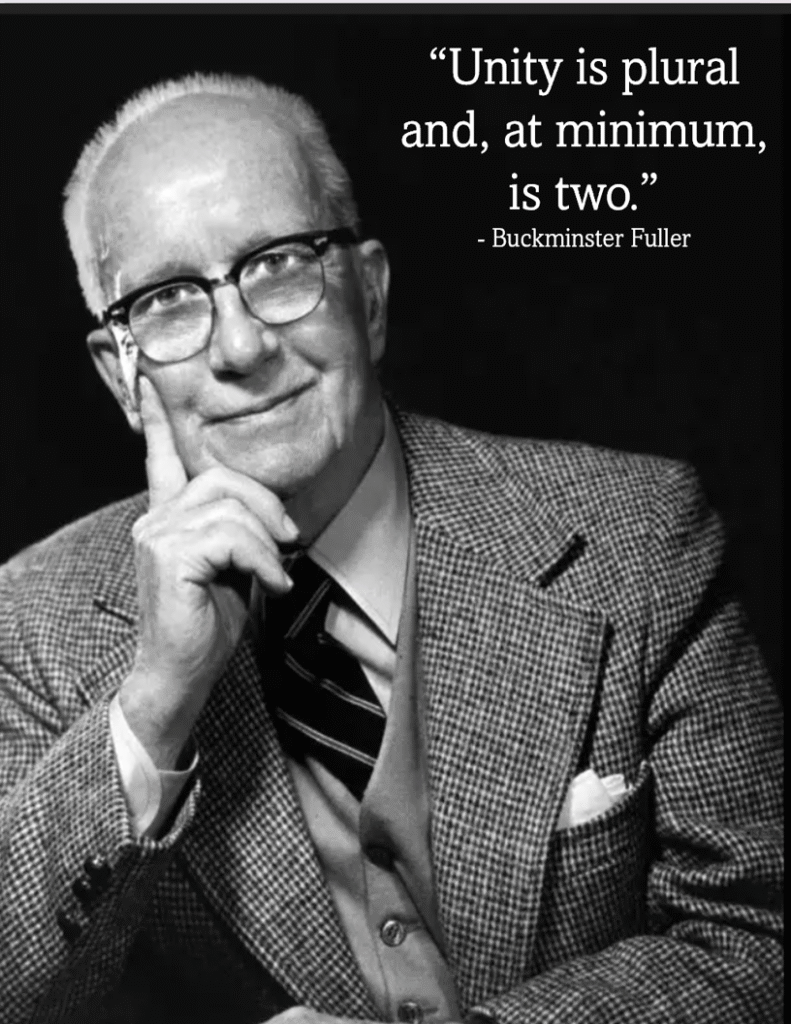
The Duotet
There are books that feel like scaffolding—quietly supporting the architecture of thought long before the structure is named. Self Comes to Mind was one of those for me.
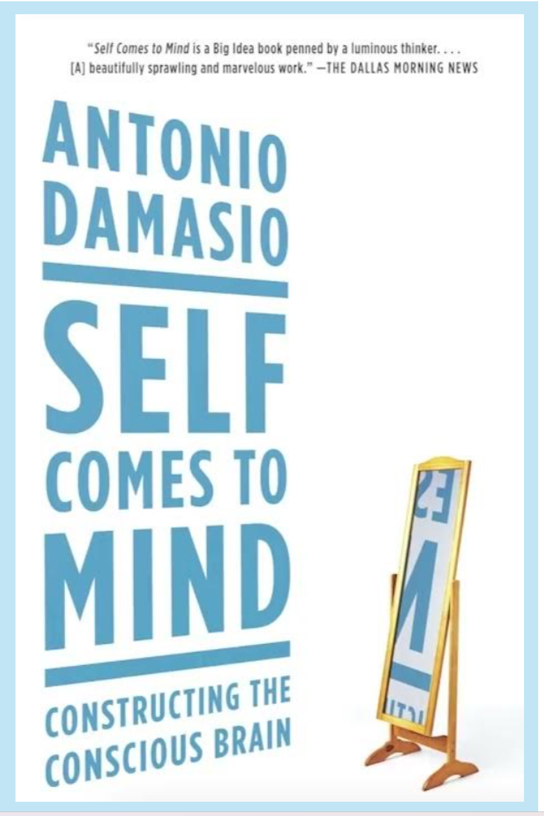
In this work, Antonio Damasio traces the emergence of consciousness from the body’s internal rhythms. He begins with the protoself, a silent mapping of the organism’s state, and moves through the core self, where interaction sparks awareness, to the autobiographical self, where memory and imagination braid into identity. It’s a progression that feels both biological and mythic: a layering of presence into personhood.
What stayed with me was not just the model, but the tone. Damasio writes with precision, but also with reverence, for the body, for the pulse beneath cognition, for the quiet intelligence of feeling. His view of the self as a process, not a possession, helped clarify my own sense of identity as recursive, participatory, and always in motion.
In Fractal Universe, I describe the Sparksphere as a living structure, one that metabolizes experience through tension, attention, and resonance. Damasio’s work offered a grounding parallel: the idea that consciousness is not imposed from above, but emerges from within, layer by layer. His concept of the autobiographical self helped me name a dynamic I now call Autobiographical Recursion, the way memory loops through meaning, shaping coherence across time.
Damasio doesn’t claim to solve the mystery of consciousness, but he illuminates its contours with care. For those of us mapping invisible dynamics, whether through neuroscience or metaphor, his work offers a kindred orientation: one that honors complexity without abandoning clarity.
Recommended for readers exploring urban design, memetic influence, and the hidden costs of technological dominance.
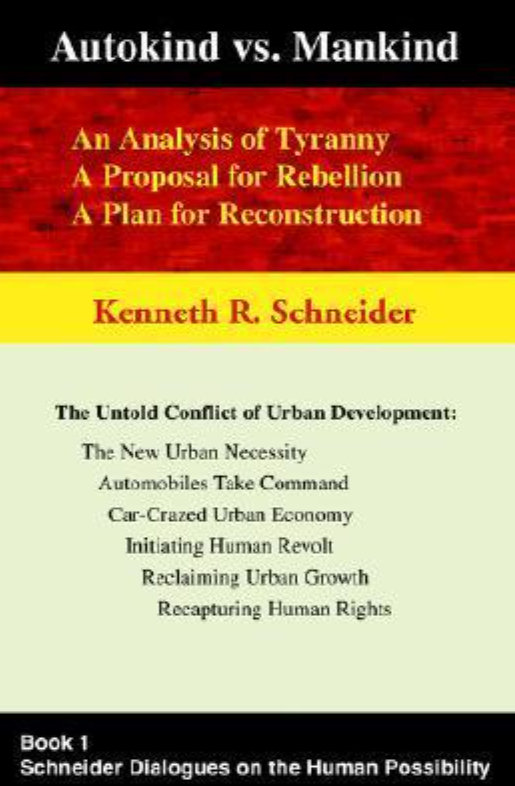
In Autokind vs. Mankind, Kenneth R. Schneider delivers a bold critique of automobility, not merely as a mode of transport, but as a cultural force that reshapes cities, citizenship, and human experience. Written in 1971, the book traces the automobile’s evolution from “the toy of the rich” to “the necessity of the poor,” ultimately becoming “the deprivation of all”. Schneider argues that the automotive empire has distorted urban environments, monopolized movement, and eroded the human scale of life.
His analysis goes beyond traffic and pollution. Schneider exposes how automobility limits access, isolates individuals, and transforms public space into corridors of consumption. He calls this dynamic a form of tyranny, one that demands rebellion and reconstruction. The automobile, in his view, is not just a machine but a meme: a self-replicating cultural force that thrives on attention, reshapes values, and consumes resources at the expense of human flourishing.
For Fractal Universe, Autokind vs. Mankind was a revelation. It illuminated the Human Atmosphere as a memetic ecosystem, an invisible field of culture, history, and collective attention where ideas, technologies, and social currents compete for vitality. Within this atmosphere, memes like the automobile can thrive parasitically, drawing energy from human lives while offering diminishing returns.
Schneider’s critique helped illustrate that cultural ecosystems require active participation, not passive immersion. Just as we need shelter from physical elements, we need memetic discernment to navigate the Human Atmosphere.
For readers of Fractal Universe, Schneider’s work offers a vivid example of how memes shape environments, and how individuals must apply intelligence, creativity, and resistance to restore human-scale coherence. It’s not just about rejecting the automobile; it’s about recognizing the memetic architecture of our world and choosing how we engage with it.
Recommended for readers exploring language, abstraction, and the architecture of human understanding.
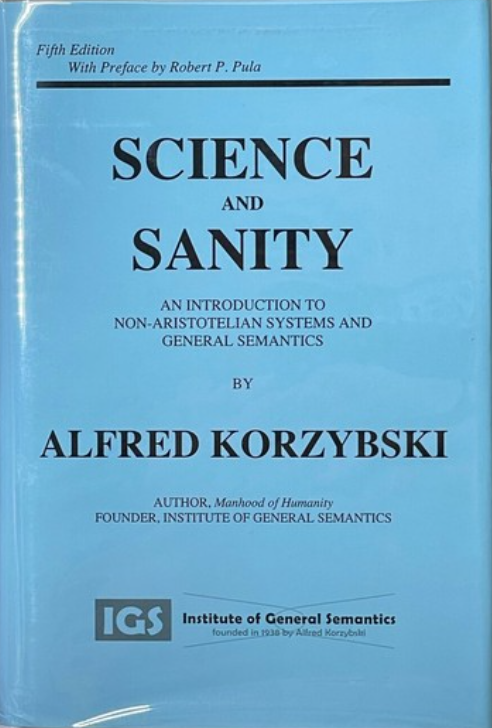
First published in 1933, Science and Sanity is Alfred Korzybski’s magnum opus, a dense, interdisciplinary work that introduced the field of General Semantics. Korzybski argued that human perception is shaped not by direct contact with reality, but by layers of abstraction filtered through language, nervous systems, and cultural constructs. His famous dictum, “The map is not the territory,” reminds us that our representations of reality are not reality itself.
At the heart of the book is the Structural Differential, a visual metaphor for abstraction. It depicts how experience moves from the event level (raw reality) to increasingly abstract layers: sensory impressions, descriptions, inferences, and symbolic representations. With each step, something is inevitably left out. This omission isn’t just quantitative, it’s qualitative. The nature of what remains shifts. Korzybski’s insight is that sanity, clarity, and effective communication depend on recognizing these shifts and navigating them consciously.
Korzybski’s Structural Differential became a conceptual bridge for Fractal Universe. Its recursive abstraction mirrors fractal dynamics: each level of reality is a self-similar echo of the one before, yet qualitatively distinct. In the Fractal Universe framework, this is vividly illustrated by the transition from the Human Atmosphere, a collective field of history, myth, and cultural resonance, to the individual human, shaped by personal lineage and local context.
Just as Korzybski showed that abstraction filters reality, Fractal Universe reveals that each scale of being metabolizes meaning differently. The Sparksphere, like the Structural Differential, is a recursive unit of coherence, one that evolves through tension, resonance, and dimensional emergence. Korzybski’s work affirmed that clarity is not found by collapsing complexity, but by honoring the nested structure of reality and the qualitative shifts between layers.
For readers of Fractal Universe, Science and Sanity offers a foundational lens: a way to see abstraction not as distortion, but as a necessary, and navigable, feature of human experience.
Suggested for readers exploring complexity, scale, and the hidden architecture of natural form.
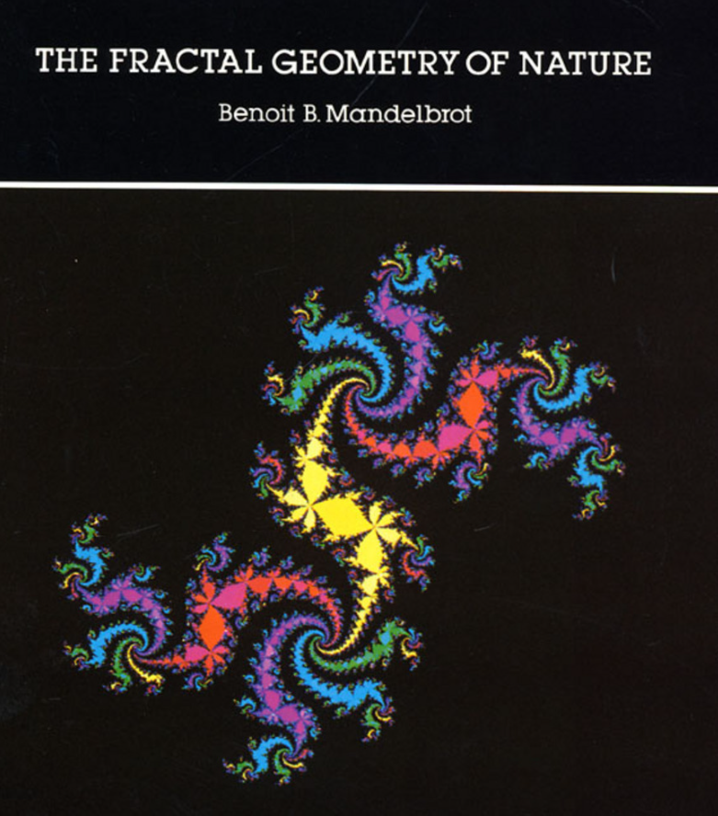
In this landmark work, Benoit Mandelbrot introduces fractals, mathematical shapes that repeat at every scale, as a new lens for understanding the natural world. From coastlines and clouds to blood vessels and galaxies, Mandelbrot reveals that nature’s patterns are not smooth or simple, but rough, recursive, and self-similar. These forms defy classical geometry, yet they are everywhere.
Mandelbrot’s insight is revolutionary: complexity in nature arises not from randomness, but from iteration. By repeating simple rules across scales, fractals generate forms that are infinitely detailed and structurally coherent. He also proposes that dimensions themselves can emerge through this process, where a line, iterated recursively, becomes a plane, and further iterations yield forms that transcend conventional dimensional categories. These higher dimensions are not just more; they are qualitatively different.
Reading Mandelbrot was a moment of ignition for Fractal Universe. His concept that dimensions emerge through iteration of self-similar forms became a foundational principle in the Fractal Universe framework. The Sparksphere itself is a fractal unit, defined by its qualities of Being and Doing, recursively expressing coherence across nested layers. Like Mandelbrot’s fractals, the Sparksphere metabolizes tension, reorganizes structure, and reveals new dimensional qualities as it evolves.
Mandelbrot’s work also affirmed Gina’s intuitive sense that scale is not just quantitative, it’s qualitative. A shift in scale can reveal new properties, new dynamics, and new forms of meaning. For readers of Fractal Universe, Mandelbrot offers the mathematical mirror to your philosophical scaffolding, a way to see that the universe is not built from static parts, but from living patterns that unfold through resonance and recursion.
“Clouds are not spheres, mountains are not cones, and lightning does not travel in a straight line.” —Benoit Mandelbrot
Some books don’t just inform—they ignite. For the development of Fractal Universe, four works served as catalytic prisms, each refracting a dimension of structure, motion, and meaning that reshaped how reality could be perceived and articulated.

The Nature of Physical Existence by Ivor Leclerc
Leclerc’s metaphysical lens offered a foundational shift: existence is not static substance, but dynamic relation. His emphasis on continuity and interaction helped shape the Sparksphere’s recursive architecture and its treatment of motion as meaning. Leclerc’s vision echoes throughout Fractal Universe, from glossary entries like Ontological Tension and Nested Coherence to the philosophical scaffolding that treats reality as a living geometry. His work seeded the idea that structure is not imposed, but emergent through relational flow.
Synergetics by Buckminster Fuller
Fuller’s Synergetics brought geometry alive as a metaphysical language. The tetrahedron as minimal system, the duotet as relational wholeness, and the distinction between inside and outside, all became core metaphors in Fractal Universe. Fuller’s democratic metaphysics, which insists that anyone can discover universal principles, resonated deeply with Fractal Universe’s invitation to participatory insight. His concept of “pattern integrity” helped clarify the Mirror Frontier, affirming that coherence is not just observed, it’s lived.
The Fractal Geometry of Nature by Benoit Mandelbrot
Reading Mandelbrot was a moment of ignition. His revelation that complexity arises from simple recursive rules gave form to the nested meaning and scale-sensitive resonance of the Fractal Universe framework. The fractal became not just a mathematical object, but a philosophical metaphor, a way to perceive reality as self-similar, expressive, and alive. Fractal Universe emerged from this insight, translating Mandelbrot’s geometry into poetic scaffolding and visual metaphors. His work affirmed that nature’s patterns are not noise, but intelligence.
Order Out of Chaos by Ilya Prigogine and Isabelle Stengers
This work introduced a vital paradox: that systems evolve not in spite of instability, but through it. Prigogine and Stengers revealed how order emerges from disequilibrium, how transformation arises at the edge of chaos. Their insights into dissipative structures and nonlinear dynamics helped shape Fractal Universe’s treatment of thresholds, bifurcations, and the generative tension between Fusion and Fission. Their work affirmed that breakdown is not failure, it’s the birthplace of new coherence.
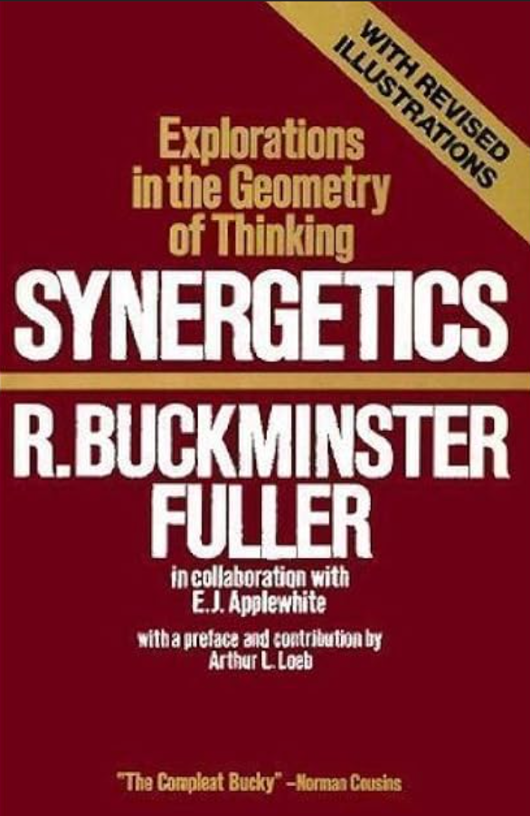
Buckminster Fuller’s Synergetics was a catalytic force in shaping the structural intuition behind Fractal Universe. His exploration of geometry as metaphysical language, especially the tetrahedron as the minimal system and the duotet as relational wholeness, deeply informed the Sparksphere’s dimensional scaffolding.
Fuller’s insistence that “structure is the pattern integrity of any entity” helped clarify the distinction between inside and outside, container and contained, observer and observed. Just as Fractal Universe invites readers to discover universal principles through lived experience, Fuller’s democratic metaphysics affirmed that generalized truths are not the domain of experts alone, but accessible to any curious mind.
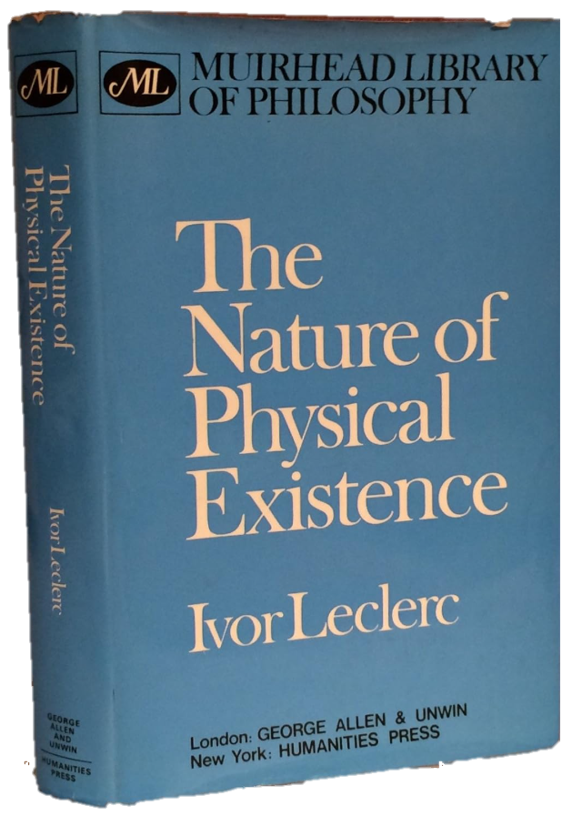
Suggested for readers seeking a metaphysical foundation for matter, motion, and the architecture of reality.
Originally published in 1972, Leclerc’s work is a sweeping philosophical inquiry into the nature of the universe. Drawing from Aristotle, Leibniz, and Whitehead, he examines how concepts like matter, motion, space, and substance have evolved, from ancient cosmologies to modern physics. His central concern is not just what exists, but how existence is structured and understood.
Leclerc challenges the reductionist view of physical reality as merely mechanical or mathematical. Instead, he proposes a dynamic ontology, where relation, action, and continuity are essential to understanding physical existence. His treatment of the infinite, the continuum, and the interplay between discreteness and wholeness invites readers to rethink the very scaffolding of being.
Leclerc’s metaphysical framework had a profound impact on the development of Fractal Universe. His emphasis on relation, continuity, and dynamic structure helped shape the Sparksphere’s recursive architecture and its treatment of motion as meaning. Like Leclerc, Fractal Universe rejects static substance in favor of living geometry, where existence is not fixed, but constantly reorganizing through interaction and flow. For readers of Fractal Universe, Leclerc offers a philosophical foundation beneath the fractal scaffolding, an invitation to perceive reality not as a collection of things, but as a dynamic field of becoming.
“The physical existent is not merely extended—it is structured, relational, and in motion.” – Ivor Leclerc
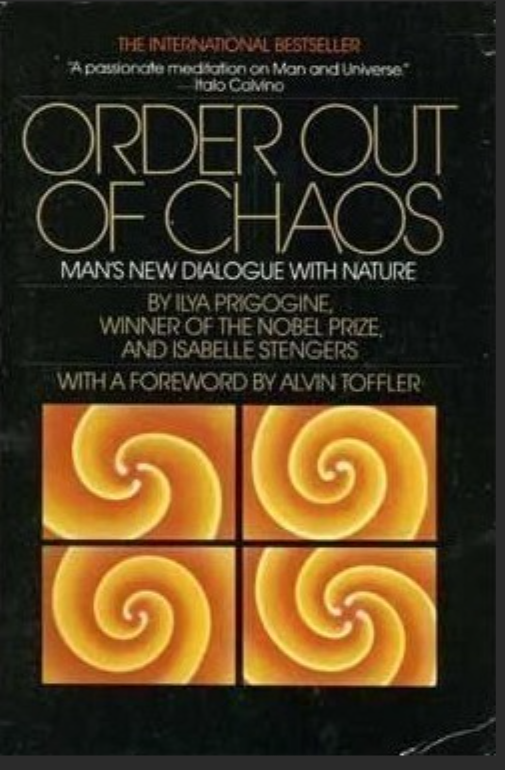
Suggested for readers fascinated by complexity, thermodynamics, and the philosophical implications of time and transformation.
In this paradigm-shifting book, Nobel Laureate Ilya Prigogine and philosopher Isabelle Stengers challenge the classical view of a deterministic, reversible universe. They introduce the concept of dissipative structures, systems that maintain order by operating far from equilibrium. Through this lens, chaos is not a breakdown but a generative force, allowing new forms of order to emerge.
The authors explore how irreversibility, entropy, and time are not anomalies but essential features of reality. Their synthesis bridges physics, biology, and philosophy, offering a new framework for understanding evolution, consciousness, and creativity.
Order Out of Chaos offers a scientific foundation for one of Fractal Universe’s core insights: that instability is not a breakdown, but a generative threshold. Prigogine’s concept of dissipative structures, systems that self-organize through energy flow and instability, mirrors the Sparksphere’s recursive dynamics. As described in Fractal Universe, “Living systems, creative processes, and even conversations are rarely in equilibrium… They are unstable, but productively so.” The Sparksphere itself is a dissipative structure: open, far-from-equilibrium, and animated by tension. It metabolizes pressure into coherence, reorganizing its internal geometry across nested layers. Whether it’s a person under stress, a community in flux, or a mind wrestling with paradox, these are not failures, they are bifurcations. Prigogine’s work affirms that transformation arises not in spite of instability, but because of it. This book is a powerful companion for readers learning to recognize themselves as living, evolving systems, capable of generating order through flow.
“The future is uncertain… but this uncertainty is at the very heart of human creativity.” —Ilya Prigogine
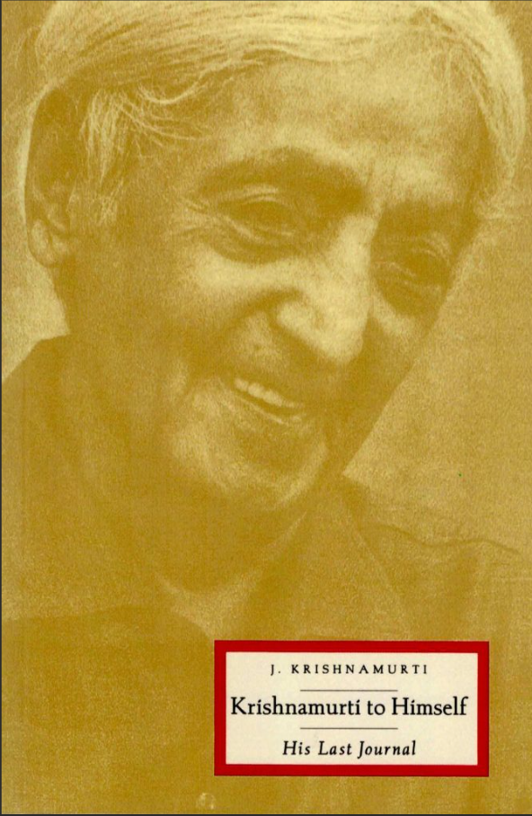
Suggested for readers drawn to direct perception, psychological freedom, and the sacred simplicity of being.
In this spoken diary, recorded between 1983 and 1984, J. Krishnamurti reflects on nature, death, conditioning, and the urgency of transformation. His voice, unadorned, spacious, and piercing, guides readers beyond thought and belief into the immediacy of awareness. Alternating between second- and third-person narration, he dissolves the boundary between observer and observed, inviting us into a consciousness unclouded by identity.
Unlike his public talks, this journal feels like a whisper from the edge of silence. He speaks of trees, birds, and the movement of the mind with the same reverence. There is no doctrine, no method, only the invitation to see freshly, without distortion.
Krishnamurti’s final journal resonates deeply with Fractal Universe’s commitment to unfiltered awareness and reader autonomy. His refusal to systematize mirrors the glossary’s recursive structure, where definitions evolve through lived experience rather than fixed doctrine. His reflections on nature, death, and psychological freedom illuminate the Sparksphere’s subtler dynamics, such as The Edge of Thought and Sacred Simplicity. For readers navigating the Human Atmosphere’s invisible currents, this book offers a quiet invitation to dissolve conditioned geometry and meet reality as it is, without separation, without effort, without self.
“The extraordinary simplicity of dying.” —J. Krishnamurti