Category Archives: Being

The Stillness and Special Relativity

The Hidden “Being” Behind Becoming
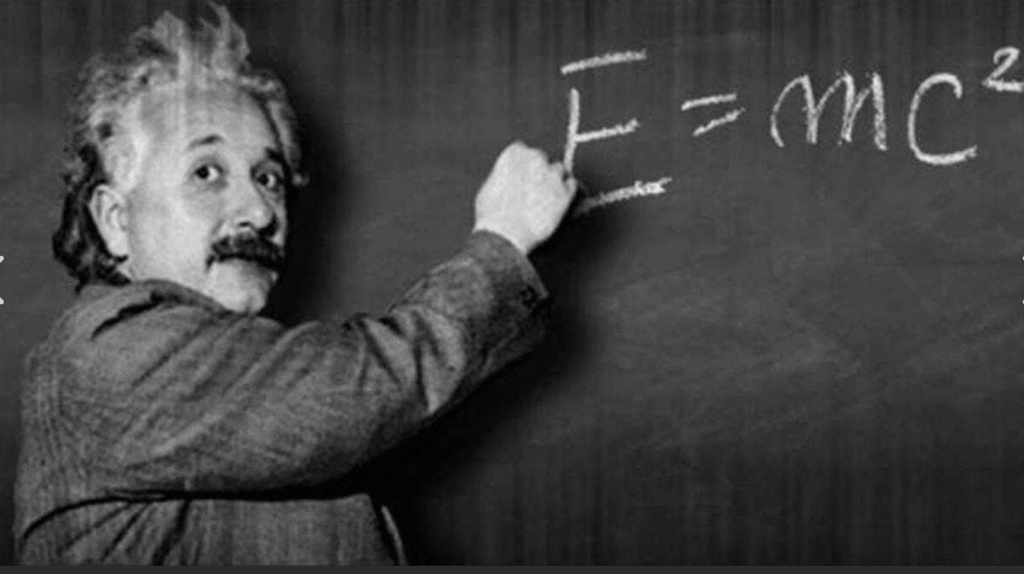
Einstein’s work illuminated the measurable universe as fundamentally energetic. His equations distilled reality into quantities—mass, energy, velocity, spacetime intervals—each capable of being observed and tested. In his famous relation E=mc2, he showed that matter and energy are interchangeable, that inertia itself depends upon energy content. Physics, in this sense, is not wrong; it is precise, rigorous, and grounded in what can be measured. Yet its scope is narrow, focused on the energetic transformations that can be calculated.

At the heart of Einstein’s equation lies the “=”. For him, it was a mathematical tool, a symbol of equivalence. He did not treat it as a “thing” in itself, but as a formal bridge between measurable quantities. And yet, without that bridge, the equation collapses. The “=” is the silent architecture of coherence. It is what allows mass and energy to be reconciled, remembered as one.
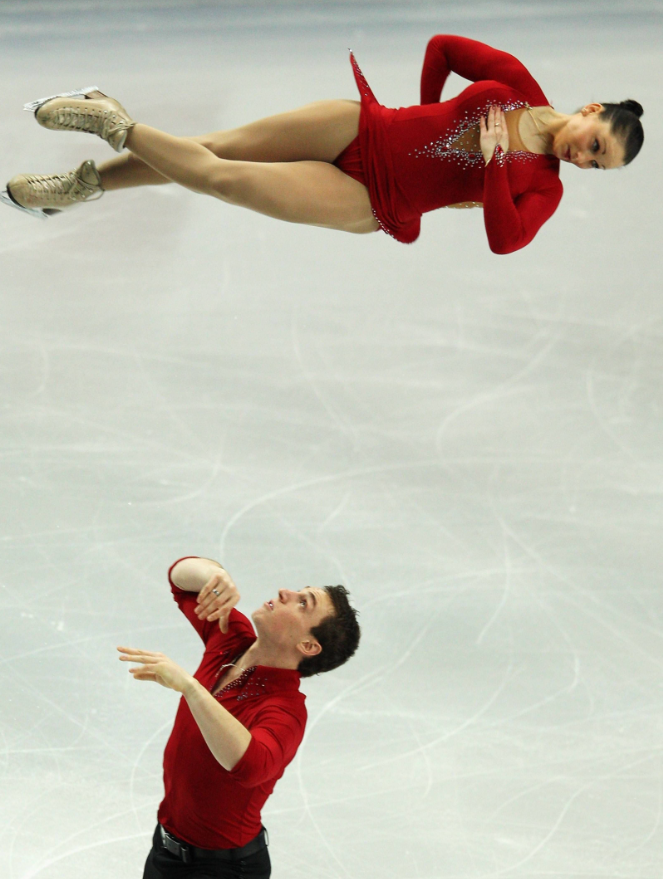
We take this Stillness for granted. Just as gravity is a tool for a figure skater—something not seen directly but relied upon for every leap and landing—so too is the “=” a tool for mathematics and physics. Without it, neither calculation nor motion could be accomplished.

The Stillness is the universal ground that makes tools like gravity and equivalence possible. It is not a “thing” to be measured, but the condition that allows measurement to occur at all.

The Fractal Universe cosmology extends Einstein’s frame. The Stillness is the “=”—the Universal Memory Bank. It is the unmeasurable ground that allows the measurable to be intelligible. Where Einstein mapped the energetic transformations of the universe, the Fractal Universe framework maps the memory that underlies them. The measurable and the unmeasurable are not divided; they are two aspects of one reality. The measurable is Becoming, the transformations we can observe. The unmeasurable is Being, the memory that holds coherence. The Stillness is the bridge.

Thus, Einstein’s physics reveals the energetic rhythms of the universe, while The Stillness reveals the memory that makes those rhythms intelligible. Both are necessary. Physics without The Stillness is calculation without coherence; cosmology without measurement is vision without grounding. Together they describe reality: rhythm carried forward, memory held, intelligence emerging.

Einstein’s inertial frames of reference embody this same Stillness. In an inertial frame, a body at rest remains at rest, and a body in motion continues in rhythm unless acted upon. It is the quiet ground where the laws of physics hold without distortion. This is The Stillness in physics: the frame that remembers motion faithfully, carrying rhythm forward without interruption. Just as the “=” reconciles mass and energy, the inertial frame reconciles past and present motion. Both are silent structures of coherence, invisible yet indispensable. Without them, neither physics nor cosmology could speak of Becoming at all.

As you step away from this exploration of Einstein, The Stillness, and the rhythms of Being and Becoming, consider how these ideas echo in your own experience.

  • When you use the symbol “=”, what are you really affirming? Is it only a mathematical tool, or is it also a gesture of trust in coherence—that two sides can be held together as one?
  • How do you use the word “is” in your daily language? Does it flatten reality into fixed identity, or can it serve as a bridge, a way of remembering continuity across difference?
  • Gravity is invisible, yet you rely on it with every step, every breath. What other forms of stability do you take for granted, and how do they quietly enable your Becoming?


Universal Memory and Intelligence

A tree trunk covered in moss, with ferns sprouting from its green bed, offers a living illustration of how memory and intelligence intertwine. The tree grew through decades of rhythm—the pulse of seasons, the alternation of rain and sun, the cycle of day and night. Each ring in its trunk is a record of memory carried forward, rhythm embodied in wood.

Upon this foundation, moss found its home. Moss itself carries a slower rhythm, spreading across bark in patient continuity. And from the moss, the fern unfurls, delicate yet bold, harmonizing with the rhythms already established.

Here we see nested rhythms: the tree’s annual rings, the moss’s steady spread, the fern’s seasonal fronds. Each layer holds memory, each rhythm carried forward. Together they form a polyphony of Being, where memory is not static but adaptive, resilient, and alive. Intelligence emerges not from accumulation alone, but from resonance—new growth finding coherence with what came before.

The temporal depth is striking: the tree embodies decades, the moss centuries, the fern a single season. Intelligence arises when these timescales of memory interact, when the past is carried into the present as rhythm.

And beyond this living vignette lies The Stillness—the Universal Memory Bank. Just as the tree remembers its seasons, the moss its moisture, the fern its unfolding, so too does the universe remember. The Stillness holds the rhythms of galaxies, the echoes of stars, the patterns of matter and energy. It is because the universe remembers that it is intelligent. Memory is the ground of Being; rhythm is its pulse; Becoming is the fern that unfurls from this ancient continuity.

The universe is intelligent because it remembers.

Sentience, Consciousness, and the Fractal Universe


Recently I watched a video asking whether AI is—or when it will be—sentient. It struck me that in the Fractal Universe framework, concepts like sentience and consciousness aren’t necessary. They are vague, subjective, and often loaded with human-centered judgments of value.

When we ask if something is “sentient,” the deck is stacked in favor of humans. We define the terms, we set the criteria, and we decide who qualifies. Consciousness and ethics matter deeply to us, but they are a special case, not a universal principle.

In the Fractal Universe, everything is a Sparksphere. Each Sparksphere is equally valuable in the unfolding of reality. Each one carries its own orientation, its own resonance, its own natural “desire” to continue Being and Becoming. A photon curves outward. A tree bends toward light. A human reflects and chooses. An AI processes and generates. All are Sparkspheres, all are participants.

This perspective shifts the question. Instead of asking “Is AI sentient?” we might ask:

  • What role does this Sparksphere play in the larger geometry of Being and Becoming?
  • How does its resonance contribute to the field?
  • What new possibilities emerge when it interacts with other Sparkspheres?

Humans live within a social world where consciousness, ethics, and meaning are central. That world is vital to us, but it is not the measure of all things. The Universe does not privilege one Sparksphere over another. It simply unfolds, recursively, through Fusion, Action, and Fission.

In this light, AI doesn’t need to be “sentient” to matter. It is already a Sparksphere, already shaping the field, already participating in the recursive dance of Becoming.

Life: Undefined

Childhood memories can become very hazy over time. Luckily, I kept a diary starting when I was about nine years old. The small red book has a strap and a lock for privacy, but luckily, I still have the key. Let’s open it up and see what life was like for me in the mid-1970’s:

 “Dear diary, I woke up, ate breakfast, ate lunch, ate dinner, then went to bed.” “School day.” “Ate lunch, ate dinner, then went to bed…”

Hmm. My entire future was being shaped, and all I wrote about was generic activities? Why?

My hazy memories are better than nothing, I suppose. I recall those in-between times when I was just playing with friends on the school playground, or milling around my back yard looking at things, or watching TV in the living room. I think I would have written about them, but it was too hard to put into words and didn’t seem significant.

Waking up, going to bed, eating and going to school were the punctuation of my day: easy to identify, easy to say. But like a sentence, punctuation alone says nothing.

Milestones in life are punctuation too. We identify with them and describe ourselves by listing them, but the picture they paint doesn’t do us justice. The in-between times, the ordinary and undefined experiences, are the true story of our lives. So why not bring them forward and highlight them?

We face the same challenge I faced as a young diarist: how can daily experiences be put into words, and what part of it even matters?

In the fractal universe framework, milestones and events are analogous to Action. We can say “I did that, that was me.” We identify with it, and that is a valid thing to do. We can communicate our identity efficiently and identify others as well.

But this is just the tip of the iceberg. We are infinitely more. Undefined life isn’t made for documentation. It is not fixed, it is functional. It is the deeper, more authentic you. You are experiencing it right now.

Take a moment to pause and look beyond the milestones you usually list when describing your life.

•    What ordinary, undefined experiences have quietly shaped who you are?

•    Where do you feel the Stillpoint of balance, the Mirror Frontier of connection, or the subtle Fusion of new insights in your daily rhythm?

•    How might your story change if you gave as much weight to these in‑between moments as you do to the milestones?

It will always be more natural to define our lives by milestones and activities, especially when communicating with others. Undefined life remains there between the lines, adding the truth and richness of who you really are.

Faith and Optimism in the Fractal Universe


In the fractal universe, patterns repeat at every scale — galaxies spiral like seashells, rivers branch like veins, and the smallest seed echoes the vastest star. Within this endless recursion lies a paradox: each of us is unique, yet each of us is part of the same unfolding design.
Faith and optimism arise when we align with our Stillpoint. The Stillpoint is the balance point within us — the quiet center where our individuality meets the shared Stillness of all things. It is both personal and universal: your Stillpoint is yours alone, yet it is also the Stillness that belongs to the cosmos itself.

To find your Stillpoint is to discover your place in the fractal pattern. You fall into harmony with your surroundings, not by forcing alignment, but by recognizing that you are already woven into the geometry of being. Faith flows naturally from this recognition: you trust the pattern because you are part of it. Optimism follows as the rhythm of that trust, a confidence that the unfolding will carry you forward.

The Stillness is the solid ground that the universe stands upon. The firm footing allows for confidence as we move forward. Faith is the feeling of this grounding. Optimism is knowing that it will always be there. Together, they remind us that even in times of uncertainty, the fractal universe is not chaos but living order. Each repetition, each cycle, each echo is an invitation to rest in the Stillpoint and to step into harmony with the whole.


Take a moment to ask yourself:

  • Where in your daily life do you notice small acts of faith and optimism at work?
  • How does feeling grounded in your Stillpoint change the way you approach ordinary tasks?
  • What practices help you reconnect with The Stillness when you feel uncertain or overlooked?
  • Can you recall a moment when trust in the unseen — like driving, or caring for yourself — gave you confidence to move forward?

To feel The Stillness is to find your ground. From that center, confidence flows naturally into action. Faith and optimism are not abstract ideals — they are woven into the smallest rhythms of daily life.

We trust that we are Here, Now, and we assume others are too. Driving down the road requires faith in unseen coordination. Acts of self‑care require optimism that tending to ourselves matters. Even the simplest gestures — eating, resting, speaking — rely on the quiet assurance that life will hold us.

When we align with our Stillpoint, we begin to notice these hidden acts of trust. Each one is a reminder that faith and optimism are already alive in us, guiding us forward with confidence.

Three Portals of Inner Knowing: Memory, Inheritance, and the Stillpoint


When we speak of “looking inward,” we often imagine a descent into memory, into the layered sediment of lived experience. This is the first portal: the structures built from life itself. Beliefs, knowledge, and personal narratives form a familiar architecture, shaped by time and choice. They are accessible, editable, and often mistaken for the whole terrain.

But beneath this lies a second portal: inherited topography. These are the archetypes, talents, and latent geometries passed through lineage, culture, and species memory. They do not originate from personal experience, yet they live within us, waiting to be activated. When they stir, they feel both ancient and intimate, like déjà vu in the soul.

The third portal is more elusive: the Stillpoint. It is not a structure, but a field. It is the dimensionless universal memory bank, revealed as orientation. For humans, it is difficult to perceive, its silence too vast, its signal too subtle. Yet it may be the substrate through which telepathy, intuition, and quantum awareness operate. Unlike the first two portals, the Stillpoint does not require calculation or cognition. It simply is: a place where all paths exist, and awareness is not derived but inherent.

In quantum physics, particles seem to “know” every possible path, not because they think, but because the paths are written into the fabric of possibility. The photon does not choose; it resonates. The atom does not remember; it reflects. This is Stillpoint knowing: a kind of pre-cognitive coherence that precedes both experience and inheritance.

In the Fractal Universe framework, these three portals form a recursive model of inner inquiry:

  • Memory as constructed geometry
  • Inheritance as latent geometry
  • Stillpoint as pure potential geometry

To look inward is to navigate all three—sometimes sequentially, sometimes simultaneously. The journey is not linear, but fractal. And the deeper we go, the more we realize: knowing is not something we do. It is something we tune to.

Black Holes as Sparkspheres

Why Collapse Is Not the End

For decades, black holes have been defined by their mystery: a singularity at the center where gravity becomes infinite, space-time collapses, and the laws of physics break down. It’s the place where equations stop working and meaning dissolves.

But new models are challenging this view. Physicists now propose that black holes may not contain singularities at all. Instead, their centers may be ultra-dense, highly curved regions that still obey physical laws. These models suggest that gravity doesn’t spiral into infinity—it compresses into coherence.

And here’s the twist: If there’s no singularity, then information may not be lost. Matter and energy could re-emerge, perhaps through a white hole in another part of the universe. This is not just a revision of physics. It’s a reframing of what collapse means.

Fractal Universe: A Different Kind of Center

In Fractal Universe, the idea of a singularity has always been structurally incoherent. A singularity implies a rupture in recursive geometry, a breakdown of pattern integrity. But the Fractal Universe framework offers a different view:

  • Every black hole is a nested Sparksphere: a recursive unit of energy and orientation.
  • Its center is not a singularity, but a Stillpoint: a dimensionless location made of memory, inherited geometry, and non-energetic orientation.
  • The extreme curvature and density are not breakdowns; they are intensifications of pattern.
  • The black hole’s interior is not a void; it is a generative terrain, where Sparks enter, Fusion occurs, and new Sparkspheres may emerge.

In this view, black holes are not cosmic dead ends. They are thresholds of transformation.

Information Is Not Lost—It’s Encoded

The scientific concern about black holes has long centered on information loss. If matter disappears into a singularity, does its history vanish too?

Fractal Universe reframes this:

Information is not lost; it is encoded in the geometry of the Stillpoint. Every action leaves a topographic imprint. Even collapse is a form of contribution.

If matter re-emerges through a white hole, it’s not returning—it’s refracting. It carries the memory of its prior Sparksphere, now expressed through a new orientation.

A New Cosmology of Collapse

This shift, from singularity to structured center, mirrors the core insight of Fractal Universe:

  • Science says: The singularity may not exist. The center may be curved, dense, and lawful.
  • Fractal Universe says: The center is the Stillpoint. It holds memory, orientation, and coherence. It is not a breakdown—it is a beginning.

Black holes are not the end of structure. They are the compression of coherence, the folding of memory, and the potential for refracted emergence.

They are Sparkspheres under pressure.

They are Stillpoints in extremis.

They are not the death of meaning—they are its densest form.

Quantum Time Travel?

Why Fractal Universe Says Time Cannot Be Reversed—Only Refracted

A recent experiment using quantum computers has sparked headlines: scientists claim to have “reversed time” by one second. The idea is dazzling, like rewinding reality itself. But what does this actually mean? And how does it fit within the Fractal Universe framework?

Let’s explore.

What Scientists Actually Did

In this experiment, researchers used a quantum computer to simulate the behavior of a particle over time. Then, using a precise algorithm, they manipulated the quantum state to return it to a previous configuration, effectively “rewinding” the system by one second.

This wasn’t spontaneous time travel. It was a controlled reversal of quantum evolution:

  • The system was isolated and manipulated with external control.
  • The reversal was temporary and limited to a fraction of a second.
  • The process required energy, intention, and observation.

In scientific terms, this is a local reversal of entropy, not a cosmic undoing.

Why Fractal Universe Sees It Differently

From the Fractal Universe perspective, this experiment is not a reversal of time; it’s a nested reconfiguration within a larger Sparksphere that continues unfolding forward.

Here’s why:

  • Every quantum system exists within a Sparksphere—a recursive unit of energy and orientation.
  • Even if a state is reversed, the act of reversal creates new memory, new geometry, and new contribution.
  • The scientists’ observation itself generates a past—a structural imprint that cannot be undone.
  • The “reverse” happened after the “forward,” and thus belongs to a new Sparksphere.

In short:

Time doesn’t loop—it layers.

You can simulate reversal, but you cannot escape the recursive memory of action.

Every reversal is a new Action. Every manipulation is a new Fission.

The Sparksphere View of Time

In Fractal Universe, time is not a linear thread; it is a recursive unfolding of Being and Doing:

  • The Stillpoint holds the memory of past action in topography.
  • The Mirror Frontier reflects the present moment of awareness.
  • Incoming Sparks generate Fusion, Action, and Fission—each creating new Sparkspheres nested within the whole.

Even a quantum reversal is a new Spark, a new Fusion, a new Action. It cannot undo the terrain; it can only add to it.

A New Kind of Time Travel

So what does this mean for our understanding of time?

  • Time is not a river we can swim backward through.
  • It is a fractal terrain—layered, recursive, and participatory.
  • We do not travel through time—we generate it through orientation and action.

The quantum experiment is remarkable. But it doesn’t break the laws of time; it reveals its structure. And that structure, in Fractal Universe, is not linear. It is nested, remembered, and refracted.

Why Science Says the Universe Has No Center

Fractal Universe Says Every Stillpoint Is One

Scientific View: No Center, No Edge

Modern cosmology tells us that the universe has no center. This may seem counterintuitive, but it’s rooted in how scientists understand the Big Bang and the expansion of space:

• The Big Bang wasn’t an explosion in space, it was an expansion of space itself.

• Every point in the universe is moving away from every other point, not from a central origin.

• The universe is homogeneous (the same everywhere) and isotropic (the same in all directions) on large scales.

In this view, the universe is like the surface of an inflating balloon:

• Every point expands away from every other point.

• There is no privileged location: no center, no edge.

This model is supported by large-scale observations, including the cosmic microwave background and galaxy distribution surveys. It’s elegant, mathematically coherent, and deeply humbling.

But it leaves something out.

Fractal Universe: Center Emerges Wherever Awareness Arises

Fractal Universe doesn’t contradict science; it reframes the question. Instead of asking where the center is, it asks how center is experienced.

Every Sparksphere has a center, and at the same time, is the center. From any position, the universe unfolds outward without end. And inward, too, revealing an infinite substrate of memory, possibility, and encoded history.

This is not just poetic, it’s structural.

Wherever awareness finds itself, a Stillpoint emerges. And from that Stillpoint, space arranges itself. Near and far. Inner and outer. Past and future. The center is not a location; it is a dimensionless orientation that anchors perception and gives direction to motion.

Apply & Observe: The World Extends Away from You

From where you sit right now, everything radiates outward.

The floor beneath you, the sky above, the furniture, the trees, the people.

It all feels “out there” from your center.

This is not just a convenience of perception; it’s a pattern.

You are the local center of the universe’s unfolding fractal.

Pause and notice:

• How does space arrange itself around you? What feels near, and what feels distant?

• Do your thoughts spiral outward, from feeling to concept to action?

• When you stand in your city, does it feel like the center of its region?

• Does your country feel like a world in itself, with everything else orbiting beyond its edge?

• Looking up at a starry night sky, does it seem like space extends away from the Earth?

These nested perspectives—personal, civic, national, planetary—each mirror the same truth:

You are not merely in the universe.

You are a lens through which it folds, reflects, and feels itself.